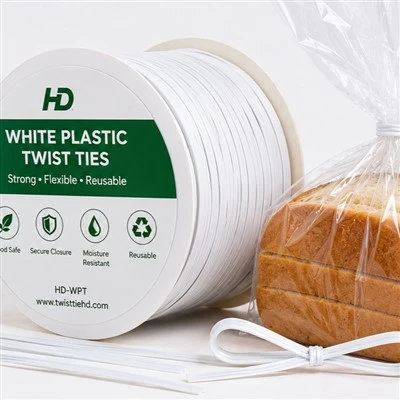
Unexpected feeding jams are among the most common problems encountered in automated bakery packaging lines. While operators often focus on machine adjustments and maintenance, the root cause frequently lies in the twist tie itself.
The internal wire structure, material consistency, and manufacturing quality of a twist tie can significantly influence machine performance.
Understanding how core wire quality affects feeding behavior can help bakery manufacturers identify the true source of recurring packaging interruptions.
Understanding How Automatic Twist Tie Machines Work
Automatic twist tie machines perform a sequence of actions:
- Feed the twist tie material.
- Cut the required length.
- Position the tie around the package.
- Twist and secure the closure.
Because these operations occur continuously at high speed, material consistency is essential for reliable performance.
Even small variations in twist tie construction can affect feeding stability.
The Role of the Core Wire
The wire core is the structural backbone of every twist tie.
It determines:
- Feeding stability
- Twist retention
- Flexibility
- Mechanical strength
When the wire structure is inconsistent, automated systems may struggle to maintain smooth operation.
Four Common Wire-Related Causes of Feeding Jams
1. Inconsistent Wire Diameter
Variations in wire thickness can create uneven feeding resistance inside machine guide channels.
Potential results include:
- Feeding hesitation
- Misalignment
- Machine stoppages
2. Poor Wire Centering
If the wire is not properly positioned within the outer material layer, the tie may not travel smoothly through automated equipment.
This can increase friction and contribute to repeated jams.
3. Weak Material Bonding
In low-quality products, separation between the wire core and outer material layer may occur during operation.
This can interfere with feeding performance and increase maintenance requirements.
4. Inadequate Wire Strength
A wire core that lacks sufficient rigidity may buckle during machine feeding.
This is particularly common in high-speed packaging applications where materials experience continuous mechanical force.
Additional Factors That Can Affect Feeding Performance
While core wire quality is critical, other factors should also be evaluated.
Spool Winding Consistency
Uneven winding can create feeding tension variations.
Material Storage Conditions
Excessive humidity or improper storage may affect material performance.
Machine Maintenance
Worn guide rails, cutting blades, and sensors can contribute to feeding issues.
A complete troubleshooting process should evaluate both machine condition and packaging materials.
How to Evaluate Twist Tie Quality
Before purchasing large quantities, buyers should assess:
- Manufacturing consistency
- Material appearance
- Wire strength
- Feeding performance
- Compatibility with packaging equipment
Requesting samples and conducting production-line testing can help identify potential issues before implementation.
Why High-Quality Twist Ties Matter
Consistent twist ties can help:
- Improve machine reliability
- Reduce packaging interruptions
- Lower maintenance requirements
- Minimize material waste
- Support higher production efficiency
For large commercial bakeries, these benefits can translate into significant operational savings over time.
Why Choose TwistTieHD
TwistTieHD specializes in manufacturing twist ties for bakery packaging, food packaging, and automated packaging systems.
We offer:
- PET Twist Ties
- Paper Twist Ties
- Plastic Twist Ties
- Custom Twist Tie Solutions
- OEM & ODM Manufacturing
- Support for Automated Packaging Applications
Our focus on manufacturing consistency helps customers achieve reliable performance in high-speed packaging environments.
Conclusion
When an automatic twist tie machine experiences repeated feeding jams, the machine itself is not always the problem.
Material quality, wire structure, and manufacturing consistency can significantly influence automation performance.
By understanding the role of the core wire and selecting reliable twist tie products, bakery manufacturers can improve production efficiency and reduce costly interruptions.
FAQ
Why does my automatic twist tie machine keep jamming?
Common causes include inconsistent twist tie quality, feeding resistance, poor material bonding, improper spool winding, or machine maintenance issues.
Can low-quality twist ties damage packaging equipment?
While they may not directly damage equipment, they can increase wear, maintenance requirements, and operational interruptions.
What is the best twist tie for automatic bakery packaging?
PET twist ties are widely used because of their reliable feeding performance and moisture resistance.
How can I test twist tie compatibility before ordering?
Request production samples and conduct machine trials under actual operating conditions to verify performance.
More Information You Can Contact:
hongda@twistties.cn