1. Quick Technical Comparison: Plastic vs. Paper Twist Ties
Before selecting a packaging closure solution, procurement teams should evaluate the core material properties that influence production performance and end-use applications.
| Technical Parameters | Plastic Twist Tie (PE-Coated) | Paper Twist Tie (Kraft Paper Covered) |
|---|---|---|
| Moisture Resistance | Excellent | Moderate |
| Core Wire Options | 0.45mm – 0.55mm Galvanized Steel | 0.40mm – 0.45mm Steel Wire |
| Twist Retention | Good | Excellent |
| Machine Compatibility | Suitable for most automatic twist tie machines | Suitable with proper machine calibration |
| Sustainability Profile | Reduced durability-related waste, but contains plastic coating | Lower visible plastic content and supports eco-friendly packaging initiatives |
| Relative Cost | Lower unit cost | Typically higher than plastic alternatives |
| Printing Capability | Available | Excellent print visibility |
2. Plastic Twist Tie: Engineered for Durability and Moisture Resistance
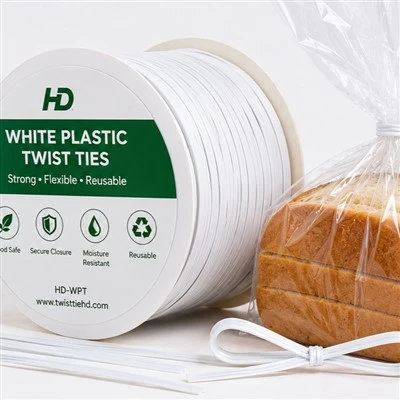
Plastic twist ties are typically manufactured by coating galvanized steel wire with polyethylene (PE), creating a durable closure solution suitable for demanding packaging environments.
Excellent Moisture Protection
The PE coating helps protect the steel core from moisture exposure, making plastic twist ties well suited for refrigerated logistics, fresh produce packaging, and environments where condensation may occur.
Applications commonly include:
Fresh vegetables and produce bundling
Frozen food packaging
Ice bag closures
Industrial component bundling
Cost-Efficient for High-Volume Production
For large-scale manufacturers and packaging distributors, plastic twist ties often provide the most economical cost-per-unit solution. Their durability and stable machine performance help support efficient packaging operations.
Reliable Automation Performance
Plastic twist ties are compatible with most commercial automatic twist tie machines and are widely used in high-volume packaging facilities where production consistency is critical.
3. Paper Twist Tie: Supporting Sustainable Packaging Strategies
As sustainability becomes a major purchasing factor across North America and Europe, paper-covered twist ties have become increasingly popular among food brands and retailers seeking environmentally conscious packaging solutions.
Eco-Friendly Packaging Appearance
Paper twist ties provide a natural, premium appearance that aligns with consumer expectations for sustainable packaging. They are commonly used by organic food producers, artisan bakeries, and specialty coffee brands.
Depending on the material construction and local waste management systems, paper-covered ties may help companies reduce visible plastic content in their packaging presentations.
Superior Twist Retention
Kraft paper coverings typically offer excellent dead-fold characteristics. Once twisted, the tie remains securely in position, helping maintain package closure integrity throughout storage and transportation.
This makes paper twist ties particularly effective for:
Bread bag closures
Pastry packaging
Coffee packaging
Gift packaging
Enhanced Branding Opportunities
Paper surfaces generally provide better print visibility, allowing manufacturers to add:
Brand logos
Product information
Batch codes
Promotional messaging
directly onto the tie.
4. Additional Procurement Factors for Packaging Buyers
Beyond material selection, professional packaging buyers should evaluate several operational considerations before placing volume orders.
Machine Compatibility
Not all twist ties perform identically on automatic equipment. Consistent wire gauge, coating thickness, and spool winding quality are essential for stable feeding and reduced downtime.
Before purchasing, buyers should verify compatibility with their existing twist tie machines.
Custom Printing Capability
Customized twist ties can improve brand recognition and packaging presentation. Paper-covered products generally offer greater print clarity, while plastic-coated versions provide durable printed surfaces for industrial applications.
Compliance Documentation
Food packaging importers should request supporting documentation such as:
Food-contact compliance declarations
Material specifications
Quality inspection reports
RoHS or REACH statements where applicable
Country-of-origin documentation
Supply Stability
Long-term sourcing success depends not only on product quality but also on manufacturing capacity, lead-time consistency, and quality-control systems.
A reliable supplier should be capable of supporting both routine production demand and seasonal volume fluctuations.
5. Which Twist Tie Is Better for Your Packaging Line?
The ideal choice depends on your operational environment and market requirements.
Choose Plastic Twist Ties If:
Your packaging is exposed to moisture, refrigeration, or condensation.
Cost efficiency is the primary purchasing objective.
You package produce, frozen foods, or industrial products.
Maximum durability is required throughout distribution.
Choose Paper Twist Ties If:
Sustainability is a key part of your brand positioning.
You serve environmentally conscious retail markets.
Premium product presentation is important.
High-quality logo printing is required.
Frequently Asked Questions
Are paper twist ties biodegradable?
The paper covering may support environmentally friendly packaging initiatives, but overall disposal characteristics depend on the wire core, coatings, and local waste management systems.
Which twist tie works better with automatic packaging machines?
Both plastic and paper twist ties can perform effectively on automatic equipment when manufactured to consistent specifications and matched to the appropriate machine settings.
Are plastic twist ties food-safe?
Food-contact suitability depends on the materials used and local regulatory requirements. Buyers should always request relevant compliance documentation from suppliers.
Can twist ties be custom printed?
Yes. Both plastic-coated and paper-covered twist ties can be customized with logos, product information, and promotional branding.
Which option is more cost-effective?
Plastic twist ties generally offer a lower unit cost, while paper twist ties may provide additional value for brands focused on sustainability and premium presentation.
Conclusion
Both plastic and paper twist ties serve important roles in modern packaging operations.
Plastic twist ties remain the preferred solution for moisture resistance, durability, and cost efficiency, while paper twist ties support sustainability initiatives, premium branding, and eco-conscious packaging strategies.
The best choice depends on your production environment, customer expectations, and regulatory requirements.
As a professional twist tie manufacturer, TwistTieHD supplies both plastic and paper twist tie solutions in continuous spool and pre-cut formats, helping food packaging companies, bakeries, and produce suppliers optimize packaging performance and sourcing efficiency.
Contact our team today to discuss custom specifications, food-contact documentation, printing options, and factory-direct volume pricing.
More Information You Can Contact: hongda@twistties.cn