Tin tie bags are used for food products that are opened and closed repeatedly-most commonly coffee, tea, and dry goods such as nuts, baking ingredients, and confectionery. The fold-over tin tie closure allows the bag to be reopened and refastened without clips or tools, which makes the format suitable for retail packs that consumers use over multiple sittings. This article explains how the bag structure works, where the format is commonly applied, and what to check when selecting a tin tie bag for a specific product.
What Are Tin Tie Bags?
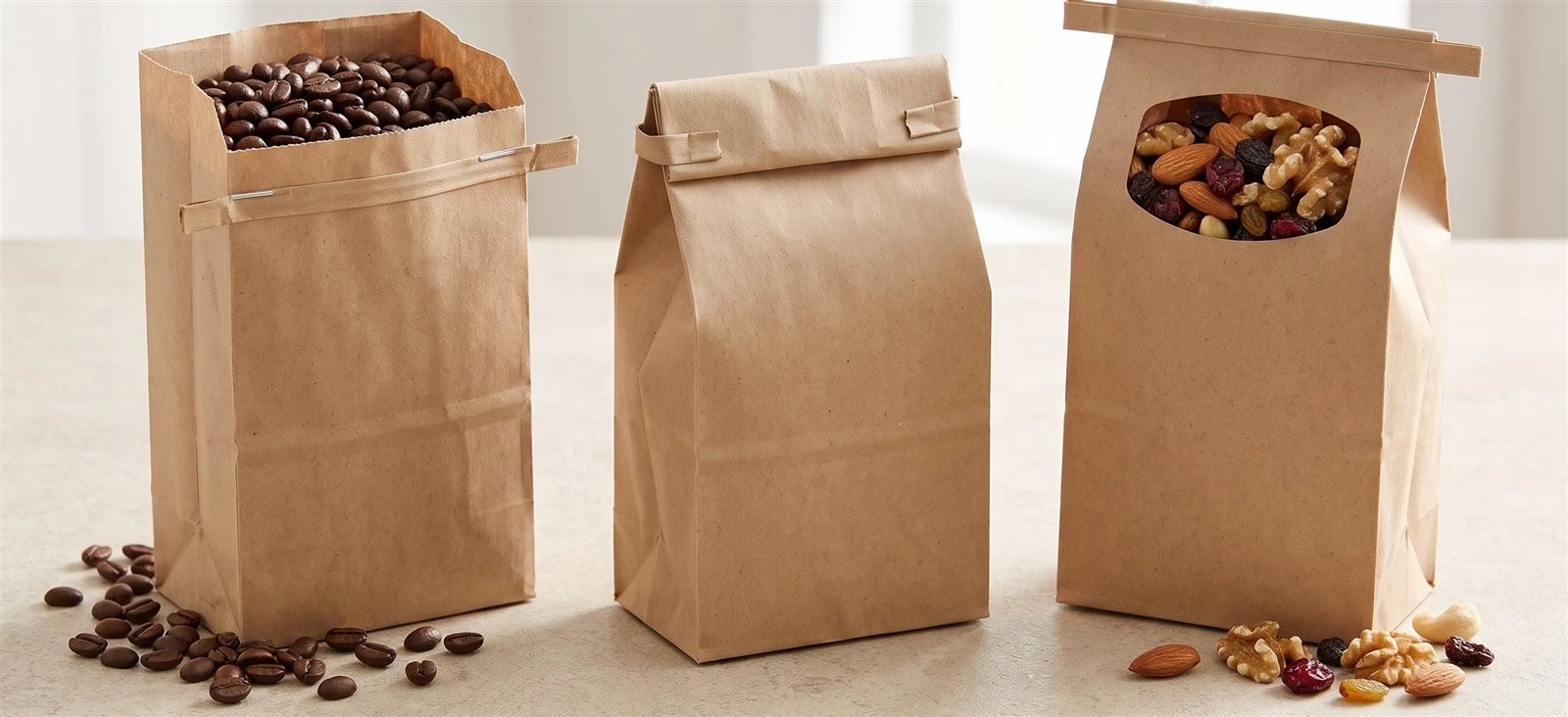
A tin tie bag is a flexible bag with a bendable strip-usually a thin metal wire or strip encased in paper or plastic-attached near the opening. The strip runs across the width of the bag, with its ends extending slightly beyond the side edges. To close the bag, the top is folded over one or more times, and the exposed ends of the tin tie are bent inward to hold the fold in place. To reopen it, the user unfolds the ends, unfolds the bag opening, and removes the product. The tin tie does not create a zipper track or a heat-sealed weld; it holds a folded flap closed through the stiffness of the bent strip.
Why Are Tin Tie Bags Used for Coffee, Tea and Dry Food?
The main appeal of the tin tie format is repeat access. Products such as whole-bean coffee, loose-leaf tea, nuts, and baking ingredients are often used in portions, and a bag that can be folded shut after each use is simpler for the consumer than finding a clip or transferring the contents to another container. The format also supports retail presentation: the bag body can be printed, left as kraft paper, or fitted with a window, and the fold-over top keeps the pack visually tidy on a shelf. Different bag materials and constructions allow brands to match the pack to different handling and presentation requirements.
A critical distinction is that the tin tie closure is not an airtight or moisture-proof seal. It holds a fold closed; it does not create a hermetic barrier. Any protection against oxygen, moisture, or light comes from the bag's film or lining, not from the tin tie itself. The closure should therefore be evaluated as part of a complete packaging structure rather than as a standalone preservation feature.
Common Applications of Tin Tie Bags
Coffee Packaging
Tin tie bags are used for whole-bean coffee and some ground coffee, particularly in retail settings and small-batch roasteries. The format allows customers to scoop or pour from a wide opening and then fold the top down between uses. For coffee, the bag body must provide the necessary barrier against oxygen and moisture; a one-way degassing valve may also be incorporated into the bag structure to release carbon dioxide from freshly roasted beans. The tin tie manages mechanical reclosing, not atmospheric protection. Roasters often use higher-barrier laminated structures for retail packs intended for longer shelf life, while kraft tin tie bags may suit shop-counter or short-turnover formats.
Tea Packaging
Loose-leaf tea and some retail tea packs use tin tie bags because the wide opening accommodates a scoop and the fold-over closure can be refastened after each use. Tea is sensitive to moisture, oxygen, and ambient odors, so the inner layer of the bag-not the tin tie-must be selected to provide the appropriate barrier. A kraft outer ply combined with a metallized or foil inner layer may be considered when aroma retention and barrier performance are priorities. For teas sold in small quantities and consumed quickly, a simpler lined paper structure may be adequate, but the closure itself should not be expected to compensate for a low-barrier bag body.
Dry Food Packaging
The dry food category covers a broad range of products: nuts and dried fruit, confectionery, baking ingredients, grains, and snack items. Tin tie bags work well when the product is free-flowing or scoopable and the package will be reopened several times. Nuts and trail mixes, for example, are often packed in lined tin tie bags that can be folded shut between servings. Confectionery and chocolate-based items require more careful evaluation: the bag material must be compatible with the product's fat content and storage conditions, and the lack of a hermetic seal may limit suitability for long ambient storage. For dry baking ingredients and grains, the format offers practical in-use convenience, provided the bag lining is chosen to keep moisture out during the period the product is actually stored in the bag.
How Tin Tie Bags Are Opened and Resealed
The reopening and reclosing cycle is straightforward, but it depends on the bag being folded correctly and the tin tie being in good condition.
- Open the bag. Unfold the tin tie ends outward and unfold the top of the bag to expose the product.
- Remove the desired amount. The wide opening allows a scoop or measuring cup to be used without tearing the bag.
- Fold the top down. Flatten the opening and fold the top over one or more times, pressing the fold flat.
- Secure the tin tie. Bend the exposed ends of the tie inward so they wrap around the folded flap and hold it in position.
The bag opening width affects how easily the fold is made: a very wide bag may require more careful folding to keep the edges aligned. The bag material also matters-papers and laminates that crease cleanly and resist cracking at the fold line will hold up better over repeated use than stiff or brittle structures. The folded tin tie closure should not be relied upon as an airtight seal; products requiring high barrier protection need a bag structure designed to deliver that protection independently of the closure.
How to Choose the Right Tin Tie Bag for Your Product
Choose the Bag Size Based on Product Volume
Bag dimensions should be matched to the fill weight and the bulk density of the product. A bag that is too large for the product volume may leave excessive space above the contents, making the fold-over closure less convenient to secure; a bag that is too small will be difficult to fill and may place stress on the tin tie when the top is folded. Consider both the packaged weight and the volume the product occupies, and allow enough flat space above the fill line for a clean fold.
Consider the Bag Material and Barrier Requirements
Tin tie bags are available in kraft paper, plastic, and laminated structures. Depending on their material composition and layer structure, plastic and laminated bags may provide different levels of protection against oxygen and moisture. Kraft paper bags typically rely on an inner lining or coating to provide grease resistance and a degree of moisture protection. Select the bag body based on the product's sensitivity to oxygen, moisture, and light, and on the intended storage duration. The barrier comes from the bag material and its lining, not from the tin tie.
Check the Bag Opening and Tin Tie Position
The position of the tin tie relative to the bag opening determines how much material is available for folding. A tie placed too close to the top edge may leave insufficient fold-over depth, while a tie placed too low may reduce the usable fill height. Check that the tin tie ends extend far enough beyond the bag edges to be grasped and bent inward easily, and that the distance between the fill line and the tin tie provides enough flat material for a consistent fold. For bags with windows or printed panels, ensure that the fold line does not interfere with critical branding or product visibility.
Match the Packaging with Retail Presentation
Tin tie bags can be specified with windows, custom printing, and different paper finishes to support shelf presence. A kraft bag with a clear window works well for bakery-style presentation, while a printed flat-bottom tin tie bag can provide a more structured retail look. The fold-over top is part of the visual identity of the pack, so consider how the bag will look after the first opening-repeated folding can soften the paper and affect the neatness of the closure over time.
Important Considerations When Using Tin Tie Bags
A tin tie closure is not a substitute for a heat seal or a hermetic closure. If the product requires an airtight or moisture-proof environment, the bag must be designed with an appropriate barrier structure, and the tin tie should be understood as an in-use reclosing feature rather than the primary preservation system. Barrier performance varies across bag materials, so the bag body and lining must be selected for the product's sensitivity to oxygen, moisture, and light.
Repeated folding can affect the appearance and function of the bag opening. Paper may crease and soften, and the tin tie itself can become misaligned if the bag is handled roughly. Users should be encouraged to fold along a consistent line rather than crushing the top, which helps the closure remain usable over many cycles. Finally, food-contact materials must comply with the regulations of the target market. Linings, coatings, and printing inks should be specified accordingly, and any window film or adhesive used in the bag construction should be suitable for direct or indirect food contact as applicable.
Conclusion: Are Tin Tie Bags Suitable for Your Packaging Needs?
Tin tie bags are a practical format for dry products that are opened and closed repeatedly, particularly coffee, tea, and a range of dry foods where in-use convenience matters. The fold-over closure is simple and tool-free, and the bag body can be specified in different materials and finishes to suit barrier needs and retail presentation. The format is not a universal replacement for high-barrier or hermetic packaging, however, so the closure and the bag body should be evaluated together as a single packaging system: the tie handles the fold, and the bag material handles the protection.
If you wish to purchase relevant products, please contact us.