

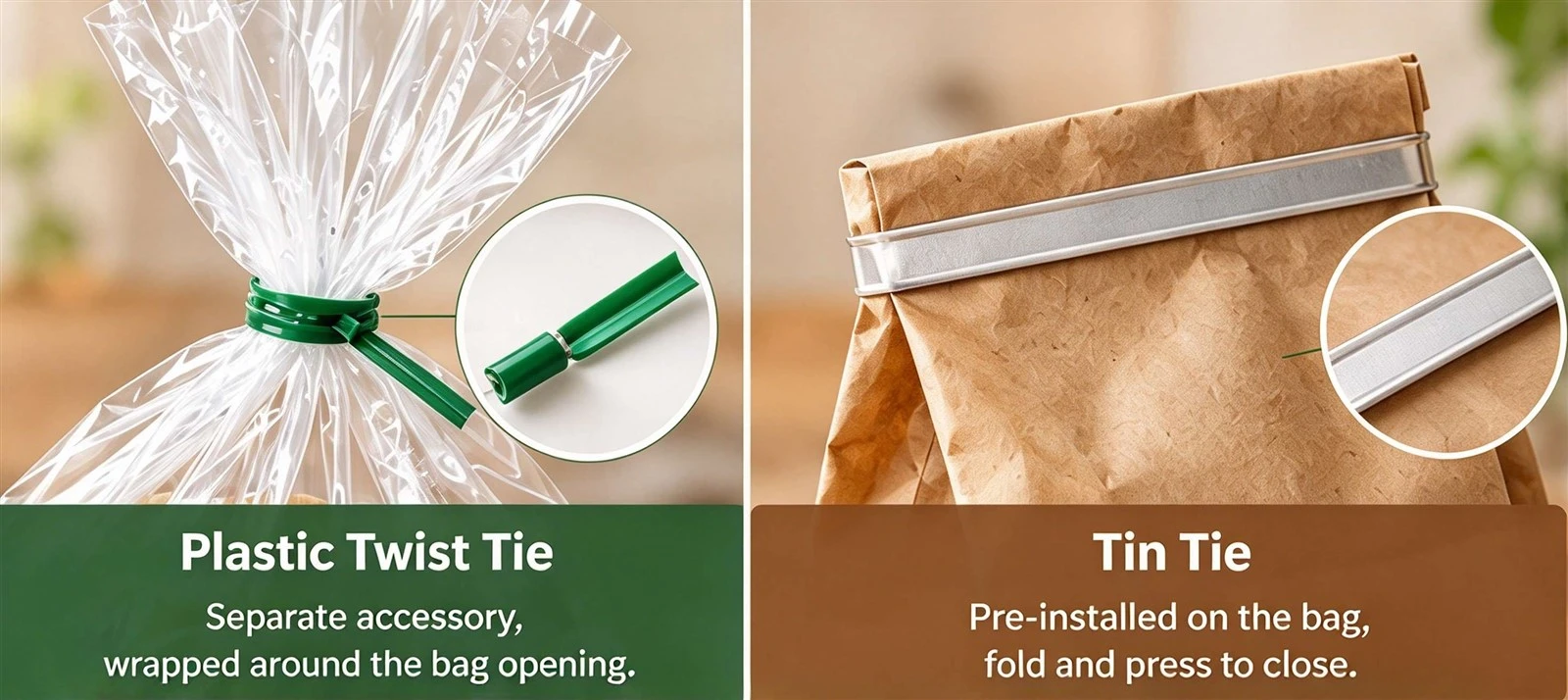
Plastic twist ties and tin ties both close bags, but they differ in how they attach to the bag and how the package is closed. A plastic twist tie is usually a separate accessory wrapped around a gathered bag opening, while a tin tie is typically pre-installed on a bag designed for fold-over closure. The right choice depends on the bag structure and packaging workflow.
What Is a Plastic Twist Tie?
A plastic twist tie is a flexible closure accessory, typically made with a bendable metal core and an outer cover. It is used as a separate item and does not need to be pre-attached to the bag.
To close a bag, the user gathers the bag opening and twists the tie around it. Twist ties are available in different lengths, so the right size can be selected for the bag opening and packaging needs.
What Is a Tin Tie?
A tin tie is generally a bendable closure strip that is pre-installed on a bag. It is common on coffee bags, bakery bags, and other package styles designed for repeated opening and closing. To close the bag, the user usually folds the top of the bag and presses or folds the closure strip to hold it in place.
A tin tie depends on the bag's design and installation position. In most cases, it is part of the bag structure, while a plastic twist tie is usually an independent accessory.
Plastic Twist Tie vs Tin Tie: Key Differences
| Comparison Factor | Plastic Twist Tie | Tin Tie |
|---|---|---|
| Basic structure | Independent flexible closure accessory | Closure strip usually integrated into the bag |
| Installation | Wrapped around the bag opening at time of use | Usually pre-installed during bag production or design |
| Closing method | Gather the bag opening and twist to secure | Fold the bag top and press or fold the closure strip |
| Bag design | Can be used with many bag formats that can be gathered | Requires a bag opening structure matched to the closure strip |
| Reopening | Untwist in reverse | Unfold or loosen the folded structure |
| Reclosing | Can often be twisted again, depending on product condition | Can allow repeated opening and closing, depending on the design and condition |
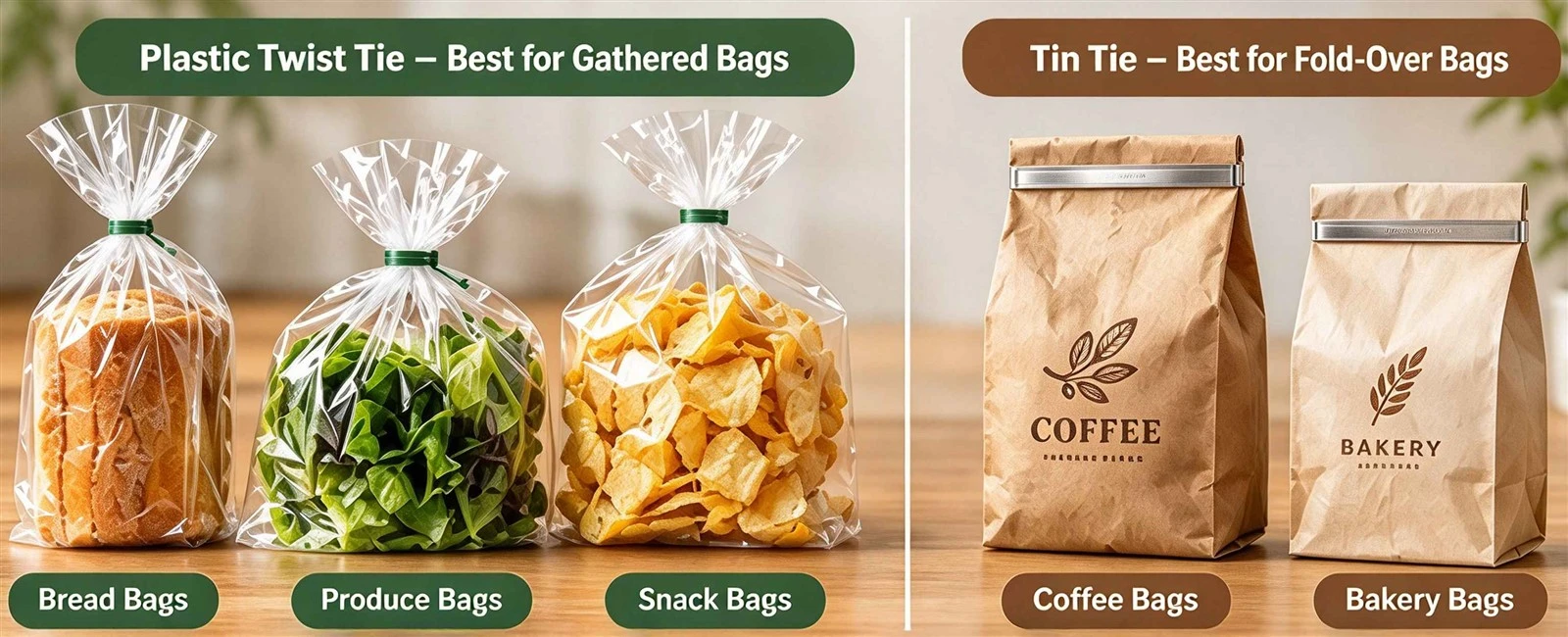
| Typical applications | Bread bags, produce bags, snack bags, gift bags, and similar formats | Coffee bags and other bags suited to fold-over closure |
Note: The table describes common designs, not universal performance. Actual closure results depend on the bag structure, closure design, and how the package is used.
How Do the Two Closures Affect Bag Design?
Using a Plastic Twist Tie with Different Bag Formats
A plastic twist tie works when the bag opening can be gathered. It usually does not need to be integrated into the bag during production. Instead, it can be added during packing or by the end user.
For this reason, the bag design should leave enough material at the opening to gather and secure with a twist tie. The size of the opening and the contents of the bag can also affect how the tie is used. This makes plastic twist ties a flexible option for many bag formats, as long as the bag can be gathered closed.
Designing a Bag with a Tin Tie
Designing a bag with a tin tie requires more planning at the packaging stage. The bag structure needs to include a suitable installation position for the closure strip. The fold area at the top of the bag should match the closure structure.
Bag size, fold style, and closure strip position all affect how the finished package works in practice. Tin ties are often a better fit for projects where the closure method is planned from the beginning of the bag design process.
Which Packaging Applications Suit Each Closure?
Applications for Plastic Twist Ties
Plastic twist ties suit packages where the bag opening can be gathered and the closure is added separately. Typical examples include bread bags, produce bags, snack bags, and gift bags. The key design question is not the product category, but whether the bag can be gathered and secured with an independent tie.
Applications for Tin Ties
Tin ties are commonly used on coffee bags, bakery bags, and other packages designed with a compatible fold-over opening and a pre-installed closure strip. Depending on the closure construction and condition, they may allow users to reopen and reclose the bag by folding the top again.
Do not assume that a tin tie is naturally airtight, moisture-proof, or able to extend shelf life. Those properties depend on the complete packaging structure and a validated design.
What Should You Consider Before Choosing?
Before choosing between a plastic twist tie and a tin tie, consider four practical questions:
- Bag structure: Is the bag opening designed to be gathered, or is it designed for fold-over closure?
- Packaging design: Should the closure be an independent item, or should it be pre-integrated into the bag?
- User operation: Is the user more likely to twist the bag opening, or fold and press a closure strip?
- Packaging workflow: Will the closure be added separately during packing, or will it come pre-configured with the bag?
There is no single answer that fits every package. The right closure depends on the bag type, the packing process, and the requirements of the final use.
Frequently Asked Questions
Is a Tin Tie the Same as a Plastic Twist Tie?
No. They differ in structure, installation method, and closing steps. A plastic twist tie is typically an independent accessory, while a tin tie is usually integrated into the bag itself.
Which Closure Is Better for Coffee Bags?
It depends on the coffee bag design. A pre-installed tin tie can work with a compatible fold-over bag opening. An independent twist tie can work when the bag opening can be gathered and twisted closed. The final choice should consider the packaging structure and any other sealing requirements.


