

Plastic twist ties and paper twist ties are both used to close bag openings and bundle light items, but they differ in outer covering, appearance, handling feel, and material composition. The better choice is not determined by whether the outer layer is plastic or paper; it depends on the bag structure, packaging process, design requirements, and the specification of the actual product.
What Is a Plastic Twist Tie?
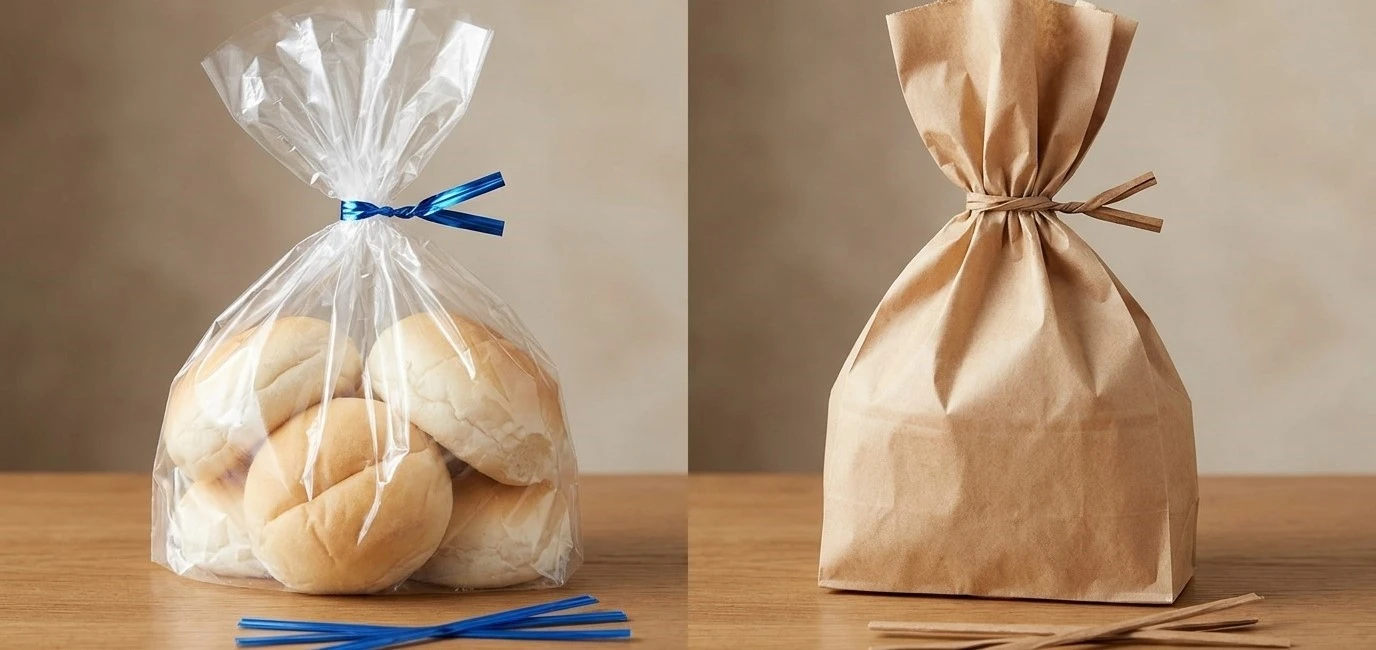
A plastic twist tie is a closure or bundling tie with a plastic outer covering. A common construction uses a flexible metal wire core covered by a plastic film or coating. The tie holds a bag neck or bundle by being bent or twisted into position. The plastic outer layer affects color, surface finish, print options, and wipeability, while the internal wire core affects flexibility and how well the tie holds after twisting.
What Is a Paper Twist Tie?
A paper twist tie is a twist tie with a paper outer covering. Many paper twist ties also contain a flexible wire core, but the exact construction depends on the product. The paper outer layer can provide a matte, textured, or natural-looking finish that suits certain retail and gift packaging designs. A paper twist tie is not the same as paper string, paper tape, or other paper-based closures, so product specifications should be checked before comparison.
Key Differences Between Plastic and Paper Twist Ties
| Comparison Factor | Plastic Twist Tie | Paper Twist Tie |
|---|---|---|
| Outer covering | Plastic film or coating | Paper covering |
| Internal structure | Often a flexible wire core, but not universal | Often a flexible wire core, but depends on product |
| Surface and appearance | Usually smoother and more uniform; can be glossy, matte, or colored | Usually textured or matte; often has a natural paper look |
| Color and printing | Options depend on the plastic film or coating, available colors, and printing specifications. | Options depend on the paper type, available colors, and printing method. |
| Closure hold and handling | Depends on wire gauge, coating, and tie length; smooth coating may feel different during twisting | Depends on paper stiffness, finish, and wire core; paper may soften or crease after repeated handling |
| Packaging design fit | Often chosen for brand color matching, clean finishes, and consistent plastic appearance | Often chosen for kraft, natural, or paper-based packaging themes |
| Material composition and end-of-life | Plastic outer layer plus possible wire core; recycling depends on local facilities and separation | Paper outer layer plus possible wire core; recycling depends on paper type, wire core, and local facilities |
This table is a general comparison, not a guarantee of performance for every product. Actual handling, closure strength, and recyclability should be confirmed with the specific twist tie specification.
How Do They Differ in Packaging Applications?
Food and Bakery Packaging
In food and bakery packaging, the key factors are bag neck stiffness, moisture or grease exposure, food-contact requirements, and whether closing is manual or automated. A plastic twist tie may be considered when the packaging requires specific colors, compatibility with an existing closing process, or a plastic outer surface that meets the applicable material requirements. A paper twist tie may be considered for dry bakery items and natural-looking packaging, but it may be less suitable if the bag neck is exposed to grease or moisture and the paper finish is not designed for that condition.
Neither type should be assumed to be more hygienic or better at preserving freshness. The specific product must meet the relevant food-contact and packaging requirements.
Retail and Gift Packaging
Retail and gift packaging often makes the choice visual. A paper twist tie can complement kraft paper bags, natural board boxes, and muted or textured designs. A plastic twist tie can be useful when the packaging needs a specific brand color, a glossy or smooth finish, or a printed effect that is easier to achieve on a plastic film. The decision should be made by matching the tie sample to the bag material, label, ribbon, and overall shelf presentation.
General Bag Closure and Bundling
For general bag closure and light bundling, practical factors matter more than material labels. These include bag opening size, item shape, bundle weight, required tie length, and whether the package will be reopened repeatedly. A paper twist tie may show changes in shape or surface condition after repeated twisting, depending on its paper finish and wire core. A plastic twist tie may provide a different feel and hold, depending on its coating and wire gauge. Testing the actual tie with the actual bag or bundle is the most reliable way to compare closure performance.
Which Should You Choose for Your Packaging?
Use this short checklist to turn the comparison into a practical decision:
- Lean toward plastic twist ties if: you need a specific plastic color or finish; the existing packaging process is set up for plastic twist ties; or the design requires a smooth, uniform plastic outer layer.
- Lean toward paper twist ties if: the packaging uses a natural paper look; the tie needs to match kraft, paperboard, or textured materials; or the product positioning calls for a paper outer covering.
- Confirm before ordering: bag material and opening structure; required tie length and closure method; manual or automated handling; appearance and printing requirements; food-contact or material compliance; and local disposal or recycling options.
Avoid blanket conclusions such as "plastic is better" or "paper is always more sustainable." The right choice is the product that fits the full packaging system.
Are Paper Twist Ties More Environmentally Friendly?
Not automatically. A paper outer layer does not make the whole twist tie recyclable or low-impact, because the product may also contain a metal wire core, coating, or adhesive. Plastic twist ties and paper twist ties should both be assessed by their complete material composition and by what local recycling facilities actually accept. Comparing environmental impact requires product-specific material data and the same functional boundary. Without that data, no general ranking should be made.
Frequently Asked Questions
Do paper twist ties contain wire?
Many paper twist ties contain a metal wire core, but the construction depends on the product type. Check the product specification before assuming a paper twist tie is wire-free.
Can paper twist ties be used for food packaging?
Suitability depends on the specific product's materials, food-contact compliance, and intended use. A paper outer layer alone does not confirm that a twist tie is suitable for food packaging.
Are paper twist ties recyclable?
Recyclability depends on the full material composition, including the paper outer layer, any wire core, and local recycling facility acceptance. A paper outer layer alone does not guarantee recyclability.
Are plastic twist ties recyclable?
Plastic twist ties are small composite items and may not be accepted in many recycling programs. Their recyclability depends on the plastic type, wire core, local collection rules, and whether the materials can be separated.
Conclusion
Plastic twist ties and paper twist ties can both close bags and bundle light items, but they differ in outer covering, appearance, handling, and material considerations. The most suitable option depends on the bag structure, packaging design, closure process, and the specification of the actual product. Testing the chosen twist tie in the real packaging application is more useful than choosing by material appearance alone.


