

Introduction
Packaging efficiency is often measured by units completed per hour, but operational speed alone does not explain how well a packaging line runs. The closure method also matters: whether it is easy to handle, suitable for repeated tasks, and compatible with the existing workflow can affect how work is organized. Plastic twist ties are one closure option for manual packaging tasks where bags are gathered and secured by hand. Their practical value depends on the packaging material, bag opening structure, operating method, and workload. This article examines where plastic twist ties fit into packaging operations and how to evaluate whether they suit a specific workflow.
1. What Does Packaging Efficiency Mean?
Packaging efficiency is not simply packaging speed. It reflects how well the steps in an operation fit together, how consistently repeated tasks can be performed, and whether the closure method matches the packaging task.
1.1 Reducing Unnecessary Operating Steps
Efficiency is affected by avoidable actions around the closure itself, such as repeatedly adjusting a bag opening, searching for closure materials, or reworking packages that did not close properly. A suitable closure method may make the operation more direct, but the actual effect depends on the surrounding workflow.
1.2 Making Repeated Tasks Easier to Manage
In repetitive manual packaging, consistency and work organization are important. The goal is not to guarantee that every closure takes the same time, but to establish a clear, repeatable sequence. A closure method that is easy to handle and fits the operator's routine can support that consistency.
1.3 Matching the Closure Method to the Packaging Task
The closure method should match the bag opening structure, packaging material, frequency of use, and operational requirements. Packaging efficiency is therefore the result of several operational factors working together, not something determined by a single packaging accessory.
2. How Plastic Twist Ties Support Manual Packaging
Plastic twist ties are used in manual packaging contexts where bags need to be gathered and secured. Their role is best understood through the closing process, routine handling, and compatibility with existing work arrangements.
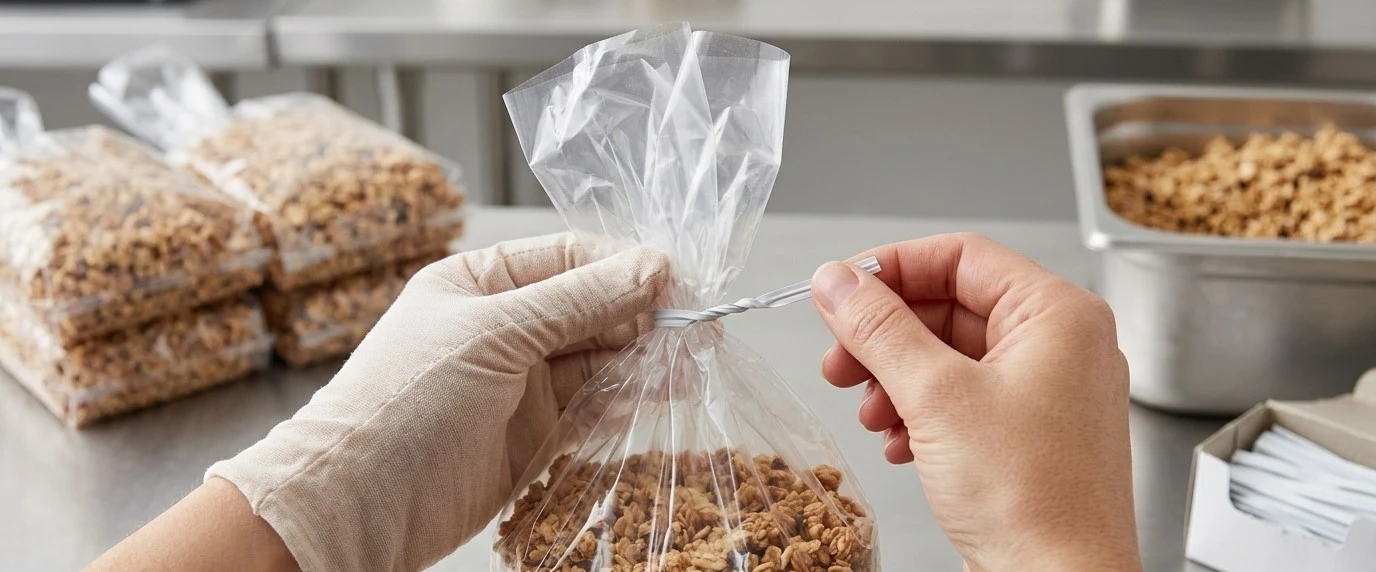
2.1 A Straightforward Bag-Closing Process
Closing a bag with a plastic twist tie generally involves gathering the bag opening, bringing the gathered portion into a shape suitable for closure, and wrapping the twist tie around it before twisting to secure. The specific steps depend on the bag type and the form of the twist tie.
2.2 Convenient Handling During Routine Packaging
In routine packaging, the placement and preparation of twist ties can affect the flow of work. Keeping ties within reach, separating them by size, and preventing tangling can reduce interruptions during closing. If operators must search for the correct specification or untangle ties before use, even a simple closure step can become cumbersome. The effect depends on work area layout and the specific task; it should not be assumed that any one closure material is always faster than tape, clips, or other methods.
2.3 Compatibility With Existing Packaging Workflows
Plastic twist ties can be incorporated into certain manual packaging processes, but compatibility should be assessed rather than assumed. Manual use and automated equipment should be evaluated separately. For high-volume or highly automated lines, equipment compatibility and production requirements need their own assessment.
3. Packaging Tasks Where Plastic Twist Ties May Help
Plastic twist ties are more useful in some packaging tasks than others. The following examples show where they may fit in practice.
3.1 Closing Bags During Manual Packing
In manual packing, products are placed into bags by hand and the bag opening then needs to be gathered and closed. Plastic twist ties can serve as a direct closure option when the bag opening is easy to gather, the twist tie suits the size and structure of the opening, and the operator can complete the closure conveniently.
3.2 Reopening and Reclosing Packages
Some packages are opened during use, part of the contents removed, and then closed again. Plastic twist ties can be untwisted and retwisted under appropriate conditions. The feasibility of repeated use depends on the twist tie's structure, material condition, and how it is used. Reclosing with a twist tie does not provide airtight, moisture-proof, or leak-proof performance.
3.3 Handling Bags of Different Sizes in One Work Area
In some work areas, operators pack products into bags of different sizes, so the bag openings vary in diameter and in the amount of material that must be gathered. If these bags are suitable for twist-tie closure, keeping several twist tie lengths or widths on hand can help operators match the tie to the opening. A tie that suits a small bag opening may not wrap securely around a larger one, and using an unnecessarily long tie on a small opening can leave excess material after twisting. Matching tie dimensions to bag opening size helps avoid fit-related problems during routine packaging.
4. Factors That Affect Packaging Efficiency
Several factors determine whether a closure method supports the workflow. Each plays a distinct role.
4.1 Bag Type and Opening Structure
The bag opening affects how easily it can be gathered, secured, and closed. A bag opening that gathers smoothly and holds its shape is easier to work with than one that is stiff, slippery, or irregular. The bag material should also be suitable for twist closure, and the finished closure should meet the packaging task's requirements.
4.2 Twist Tie Length and Dimensions
Twist tie length, strip width, and wire diameter affect how well a tie fits a particular bag opening. A tie that is too short may not wrap securely around a larger opening, while an unnecessarily long tie may leave excess material after twisting. Matching the tie dimensions to the bag opening helps avoid fit-related problems during routine packaging.
4.3 Access to Packaging Materials
How easily twist ties can be accessed affects the operating flow. If ties require extra preparation or operators frequently search for the correct size, the closure step becomes less convenient. Work area organization and material presentation are therefore part of the evaluation.
4.4 Packaging Volume and Operating Method
Different workloads and operating methods may suit different closure solutions. Low-frequency, small-batch tasks place more emphasis on convenience. Repetitive manual packaging places more emphasis on material access, operating steps, and workflow. Automated packaging requires attention to equipment compatibility and production process requirements.
5. How to Evaluate Whether Plastic Twist Ties Improve Your Workflow
A small-scale trial with comparison is a practical way to assess whether plastic twist ties suit an operation.
5.1 Record the Existing Closing Process
Document the main steps of the current closure method and note difficulties that arise during operation. This provides a baseline for comparison, including material retrieval, bag preparation, and any rework.
5.2 Test the Alternative Closure Method
Select representative bag types and packaging tasks to test plastic twist ties in actual operation. Keep the packaging contents, bag type, and working conditions as consistent as possible so the comparison is meaningful.
5.3 Compare Operating Performance
Compare the existing method with the alternative using indicators such as the number of operating steps required to complete the closure, time required per closure, convenience of reopening and reclosing, mismatches or rework during operation, and whether the finished package meets established requirements. These are evaluation indicators, not verified performance data. Also consider material preparation, material access, operator training, and downstream handling. If a closure method reduces one step but adds work elsewhere, the overall effect cannot be judged from single-closure time alone.

6. When Plastic Twist Ties May Not Be the Most Efficient Option
Plastic twist ties may not be the most efficient option when a packaging task requires airtight, moisture-proof, or other specific sealing performance that ordinary twist ties cannot provide on their own. They may also be unsuitable when the bag opening does not lend itself to gathering and twisting, when the packaging line requires a specific automated closure method, or when another closure solution better matches the existing equipment, packaging structure, or operational requirements. Packaging efficiency comes from matching the closure method to the actual task.
Conclusion
In suitable manual packaging tasks, plastic twist ties can provide a relatively direct method of closing bags. Their practicality in repeated closing, reopening, and routine operations depends on the bag type, twist tie specification, and workflow. Whether they improve overall efficiency should be judged through a practical trial that compares operating steps, closure time, rework, and material access. The decision should be based on how well the twist tie fits the packaging task and operating process, not on the product alone.
If you wish to purchase relevant products, please contact us.


