Introduction
Twist ties are a closure component used in many bakery bag packaging formats. When selecting between paper and PET twist ties, the outer material choice affects not only the tie itself but also how it pairs with the packaging bag, how it performs during packaging operations, and how the finished package presents at retail.
This article compares paper and PET twist ties from a packaging application perspective, helping packaging buyers, bakery businesses, and packaging designers evaluate which material aligns with their specific bakery packaging format. Rather than declaring one material superior, this comparison focuses on how each option functions within a complete packaging solution.
Where Twist Ties Fit into Bakery Packaging
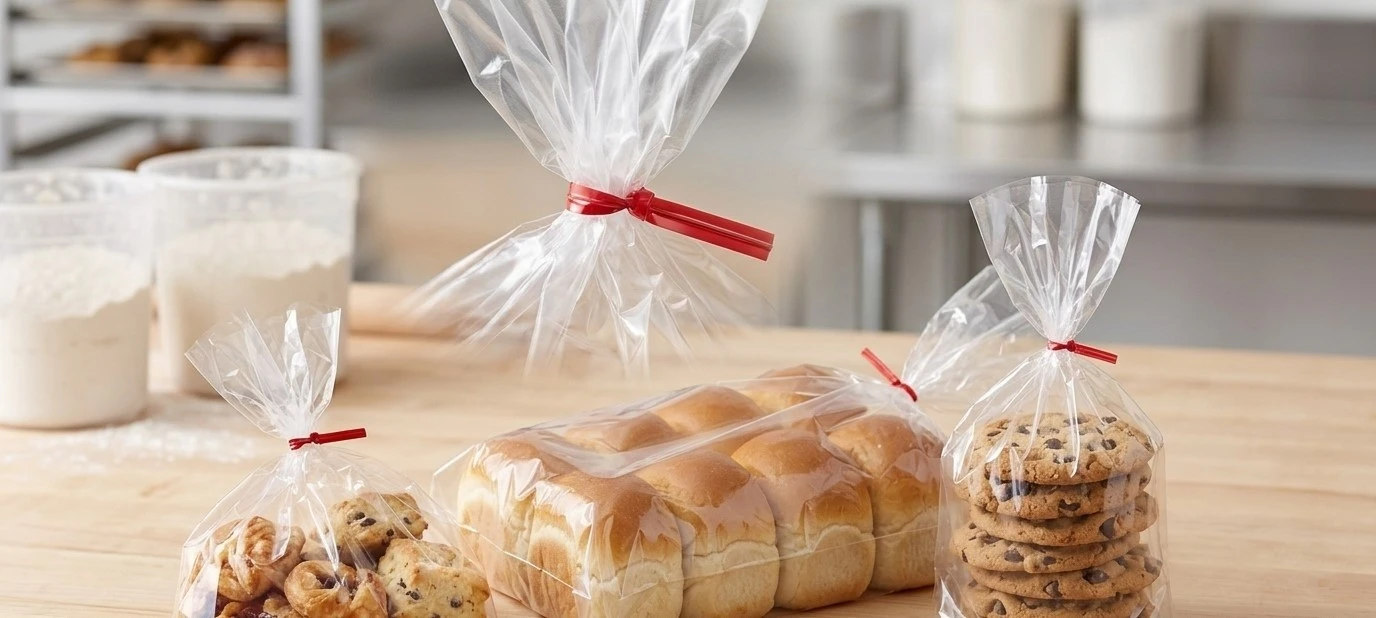
Twist ties are typically used with bagged bakery products. The packaging bag contains and displays the product, while the twist tie provides one method of closing the bag opening. Different bakery products and packaging formats have varying requirements for closure materials based on bag size, opening style, and intended use.
Both paper and PET twist ties should be evaluated as part of a complete packaging structure-the closure interacts with the bag, the product, and the packaging process, so material selection should account for these relationships rather than considering the twist tie in isolation.

Paper Twist Ties: Appearance and Packaging Applications
Paper twist ties feature a paper outer covering that creates distinct visual and functional characteristics. Their material construction and available specifications should be considered when matching them with bakery bags and other packaging components.
Visual coordination. Paper twist ties can complement paper bags, kraft paper packaging, and traditional-style bakery packaging. The paper surface supports packaging designs that emphasize a natural, simple, or paper-based aesthetic, helping maintain visual consistency between closure and bag.
Suitable packaging styles. Paper twist ties may be particularly appropriate when the packaging bag is paper-based or when the overall design intent emphasizes paper materials and traditional visual approaches.
Material claims regarding paper twist ties-including statements about environmental benefits, sustainability, recyclability, or biodegradability-depend on specific material structures and local processing conditions. These factors vary by product and region and should be verified against actual specifications rather than assumed.
PET Twist Ties: Appearance and Packaging Applications
PET twist ties use a PET plastic outer covering, offering different visual and surface characteristics compared to paper options. These ties are available in different product formats and specifications to suit various packaging requirements.
Surface characteristics. The PET outer layer typically provides a smoother finish and different light reflection properties than paper. These characteristics influence how the twist tie appears alongside various packaging materials.
Compatibility with plastic packaging. PET twist ties can be used with different types of plastic bags and other packaging structures. However, material matching between bag and tie is only one consideration-actual suitability still depends on bag structure, visual requirements, and how the package will be handled and displayed.
As with any packaging component, PET twist ties should be evaluated based on their fit within the complete packaging solution. Claims about durability, hygiene, or food packaging suitability should be verified against specific product specifications.
Paper vs. PET Twist Ties: Key Differences for Bakery Packaging
The following comparison summarizes practical differences between paper and PET twist ties in bakery packaging applications:
| Comparison Factor | Paper Twist Ties | PET Twist Ties |
|---|---|---|
| Bag material and visual style | Often used with paper bags, kraft paper, and traditional bakery aesthetics | Can pair with plastic bags and mixed-material packaging formats |
| Surface appearance | Matte paper surface; supports natural or paper-based visual themes | Smoother plastic surface; different light reflection and finish |
| Packaging operation | Confirm closing behavior with sample testing | Confirm closing behavior with sample testing |
| Usage environment | Evaluate based on handling conditions and contact with the product | Evaluate based on bag structure, closure tension, and display conditions |
| Retail display requirements | Supports brand presentations emphasizing paper, craft, or natural looks | Supports presentations where the tie needs to match plastic or mixed-material packaging |
This comparison is intended to support material evaluation rather than to define one option as superior. Both materials serve different packaging needs and should be assessed within their intended applications.
Choosing Between Paper and PET Twist Ties for a Bakery Package
The following factors help determine which twist tie material fits a specific bakery packaging format:
1. Bag material and visual style. Paper twist ties coordinate naturally with paper bags and kraft paper packaging. PET twist ties can pair with plastic bags and mixed-material formats. The tie should support the overall visual direction of the package, not contrast with it.
2. Packaging operation. Consider how the ties are handled during the packaging process-manual closing, repeated closure actions, and the pace of the packaging flow all influence suitability. Test samples under actual operating conditions rather than assuming performance based on material type.
3. Usage environment. The conditions the package experiences during handling, transport, and display affect material performance. Consider factors such as closure tension, contact with the product, and the physical demands of the packaging format.
4. Retail display requirements. Packaging appearance and brand visual identity influence material selection. The twist tie contributes to the overall look of the packaged product-paper ties support natural or craft-focused presentations, while PET ties support presentations where the closure needs to match plastic or mixed-material packaging.
5. Complete packaging format. The selected tie must work with the bag opening, the product, and the packaging process together. Material selection should serve the complete packaging solution rather than being based solely on individual material properties.
Paper and PET Twist Ties as Part of a Complete Bakery Packaging Solution
Paper twist ties are generally suited to paper-based packaging and traditional visual approaches, while PET twist ties pair well with plastic bags and mixed-material formats. No single material is suited to all bakery packaging applications-the right choice depends on how the twist tie fits within the complete packaging format.
Before finalizing a packaging solution, testing actual samples can help confirm how well the selected twist tie material matches the bag opening, the packaging process, and the intended retail presentation.
If you wish to purchase relevant products, please contact us.