

Choosing the right plastic twist tie for packaging is not about finding one universally "best" tie. It is about matching the tie to the packaging task. This guide explains the main factors to evaluate first and how they connect, so the final choice supports the package, the closure, and the packaging process.
Start With the Packaging Application
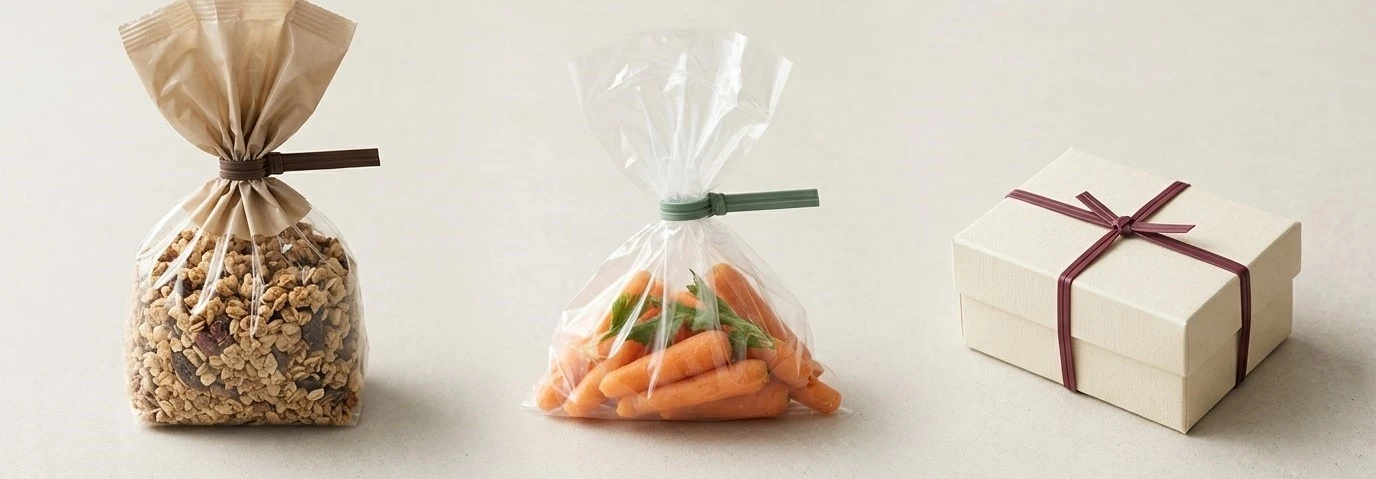
The first question is not about the tie itself. It is about what the tie needs to do.
Ask:
- What product is being packaged?
- Is the tie closing a bag, bundling items, or securing wrapping material?
- Is the package intended for retail display, storage, transport, or repeated opening and closing?
- How much material needs to be gathered or held together?
Different applications place different demands on a twist tie. Food packaging may prioritize secure bag closure. Produce packaging may involve irregular bundles. Gift packaging may place more emphasis on appearance. Floral packaging may require gentle handling. Household product packaging may involve organizing or bundling multiple items.For an overview of common packaging applications, see common uses of plastic twist ties in packaging.
The answers to these questions establish the selection priorities. A tie that is ideal for one application may be unnecessary or unsuitable for another.
Define the Closure Area
After the application, examine what the tie will actually wrap around.
Plastic twist ties are typically used around a gathered bag neck, folded or compressed packaging material, bundled products, or other suitable closure points.
The important measurement is not the flat width of the bag. It is how much material the tie must surround once the package is gathered for closing.
Bag material, bag opening structure, and closure position can all affect the size and shape of the gathered area. A thin, flexible bag may compress into a small neck. A thicker or stiffer material may create a larger, less compressible bundle. Closing the same bag at different positions can also change how much material the tie must wrap around.
This step defines the physical problem the tie must solve. It does not require selecting a specific bag-type solution at this stage.The next step is to look more closely at the bag itself. Our guide to choosing plastic twist ties by bag type explains how bag structure and opening design can affect tie selection.
Treat Length as a Fit Requirement
Length is a fit requirement. The tie must wrap around the gathered closure area and still leave enough material to twist and secure it.
Because the gathered package can differ from the flat bag dimensions, confirm the fit with the actual package rather than selecting length in isolation.
Evaluate Width and Wire Diameter Together
Width and wire diameter are related but distinct measurements.
Tie width refers to the overall width of the plastic-covered tie. It affects the format of the tie and the contact area it provides around the closure.
Wire diameter refers to the diameter of the internal metal wire core. It contributes to how the tie bends, twists, and holds its formed shape.
Neither measurement should be judged in isolation. A thicker wire is not automatically better for every application. A wider tie is not automatically the right choice for every package. The appropriate balance depends on package size, the amount of gathered material, handling requirements, and the closing process.
The goal is to select a tie that is practical to apply and suitable for the closure it must hold.
Choose a Format That Fits the Packaging Workflow
Plastic twist ties are commonly available as pre-cut ties or continuous rolls.
Pre-cut ties are supplied as individual pieces at a fixed length. They are ready to use and can suit operations where a consistent tie length is preferred.
Continuous rolls supply tie material in an uninterrupted length. The user cuts each tie to the required length during packaging. This format can suit applications where tie length varies or where ties are cut immediately before use.
The choice between formats is primarily a question of workflow fit. Consider how ties are prepared, dispensed, and applied in the actual packaging process. The format should support the workflow rather than complicate it.
Confirm the Closing Method
The closing method is a compatibility check. Whether ties are applied manually or with equipment assistance, the key question is whether the selected tie format fits the intended packaging process.
If ties are prepared, dispensed, cut, or applied as part of a workflow, confirm that the chosen format supports that process.
Consider Color and Package Appearance
Color can serve both practical and visual purposes.
A tie color can be coordinated with the bag, label, ribbon, or overall product presentation. It can also contrast with the packaging when visibility is useful. In some operations, different colors can help differentiate products, sizes, or internal packaging lines.
The key question is whether the tie should blend in, stand out, or support identification. Appearance should be considered alongside function, not instead of it.
Check Customization Requirements
Some applications can use a standard tie. Others may require specific dimensions, colors, or printed information.
Consider whether the packaging design calls for a specific color, length, width, printed branding or information, or a particular packaging format.
Customization should be based on a real packaging requirement, not on an assumption that custom is always better. For many applications, a standard tie is the most practical choice.
A Simple Plastic Twist Tie Selection Checklist
| Selection Factor | Question to Ask |
|---|---|
| Application | What is being closed, secured, or bundled? |
| Closure area | How much material must the tie wrap around? |
| Length | Is there enough length to wrap and twist? |
| Width | Does the tie format suit the package? |
| Wire diameter | Is the flexibility and holding behavior appropriate? |
| Format | Pre-cut tie or continuous roll? |
| Closing method | Does the tie fit the intended packaging process? |
| Color | Should the tie blend in, contrast, or identify something? |
| Customization | Are special dimensions, colors, or printing required? |
This checklist is a starting point. The final decision should be confirmed with the actual package.
Test the Tie With the Actual Package
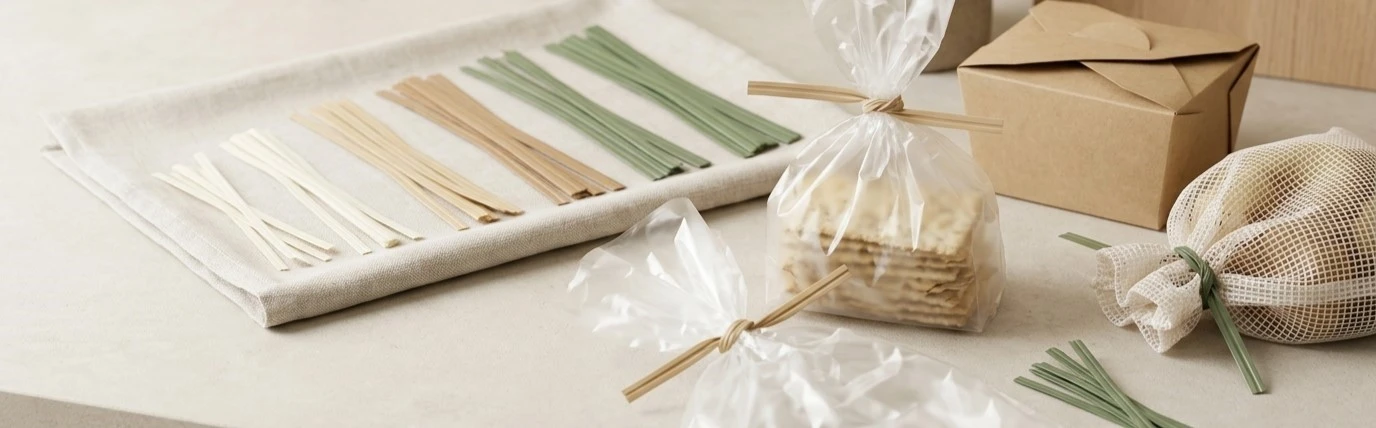
Even when the selection seems correct on paper, a packaging trial is the most reliable way to confirm the choice.
During testing, observe:
- Does the tie wrap around the closure area comfortably?
- Is there enough length left for twisting?
- Is it easy to apply?
- Does it remain closed during normal handling?
- Are the loose ends appropriate for the package?
- Does the finished closure look suitable for its intended presentation?
A simple trial can reveal issues that specifications alone cannot. The way a tie performs depends on the interaction between the tie, the packaging material, the closure method, and the handling conditions.
Common Mistakes When Choosing Plastic Twist Ties
Avoid these common selection errors:
Choosing by bag size alone. The flat bag dimensions do not show the gathered closure circumference.
Selecting length without testing the gathered package. A tie that looks correct on paper may not fit the actual closure.
Focusing on one specification. Length, width, wire diameter, format, and closing method all affect performance.
Ignoring the packaging process. A tie that works well in one workflow may be inconvenient or unsuitable in another.
Final Selection Approach
Choosing a plastic twist tie starts with the packaging task. Define what needs to be closed, secured, or bundled. Examine the closure area. Treat length as a fit requirement. Evaluate width and wire diameter together. Choose a format that fits the workflow. Confirm the closing method. Consider color and customization only where they matter. Then test the tie with the actual package.
The goal is not to find a single "best" twist tie. The goal is to find the tie that fits the specific packaging application, and to confirm that fit in real use rather than by specifications alone.


