

Household products vary widely in shape and packaging format. Some are sold in simple bags that need a gathered-neck closure. Others consist of several small pieces that must be bundled together or kept organized inside a larger package. Plastic twist ties provide a practical way to close, secure, bundle, or arrange these items during packaging. This article explains how plastic twist ties are used in household product packaging, focusing on common packaging tasks rather than comparing specific tie specifications. The goal is to show where they fit, what they can hold, and when another closure may be more appropriate.
Four Common Packaging Tasks
Closing Bags and Pouches
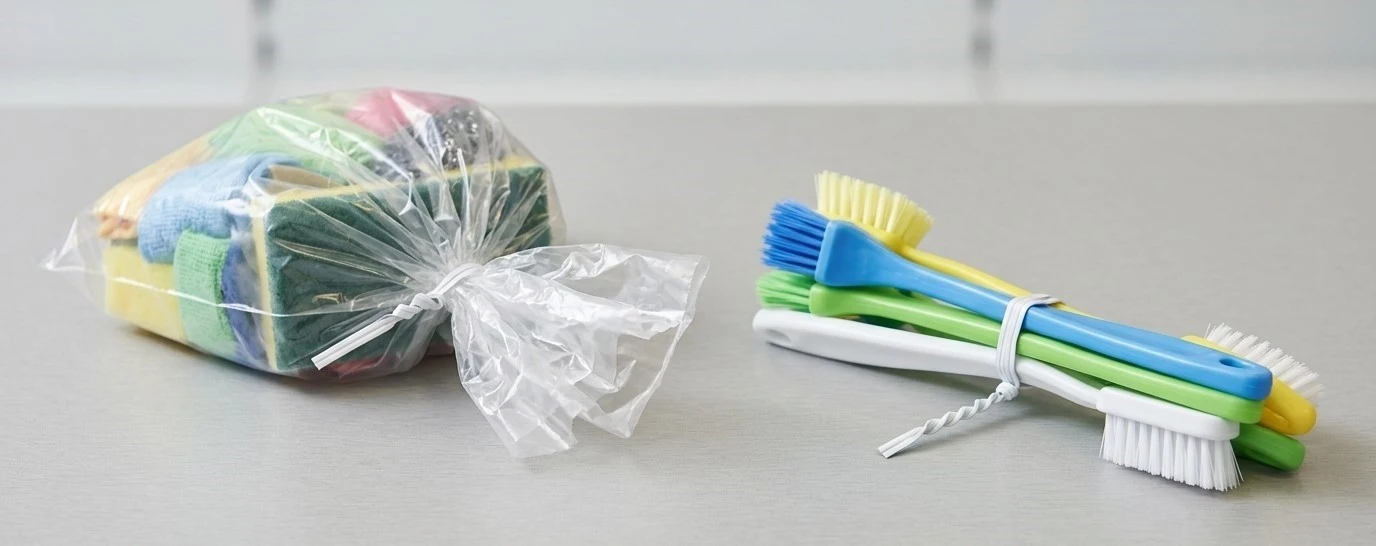
Many household products are packaged in flexible bags that require a simple closure. Small household accessories, cleaning accessories, craft supplies, storage products, and miscellaneous household items may all use a twist tie to keep the bag opening closed.
The process is straightforward: gather the bag opening, position the tie around the gathered section, and twist it to form a closure. This is a mechanical closure, not an airtight or moisture-proof seal. It simply keeps contents contained during handling and display.Plastic twist ties are available in formats suitable for simple bag-closing and bundling applications where a flexible mechanical closure is needed.
Bundling Multiple Items Together
A twist tie can also wrap directly around several items to hold them as one unit. Small brushes, cleaning accessories, cables or cords, lightweight household components, and sets of similar small items can be bundled this way.
In this role, the tie functions as a bundling component rather than a bag closure. It keeps several pieces together, which can simplify packaging and reduce the number of loose components inside a larger package.
Keeping Accessories Organized Inside Packaging
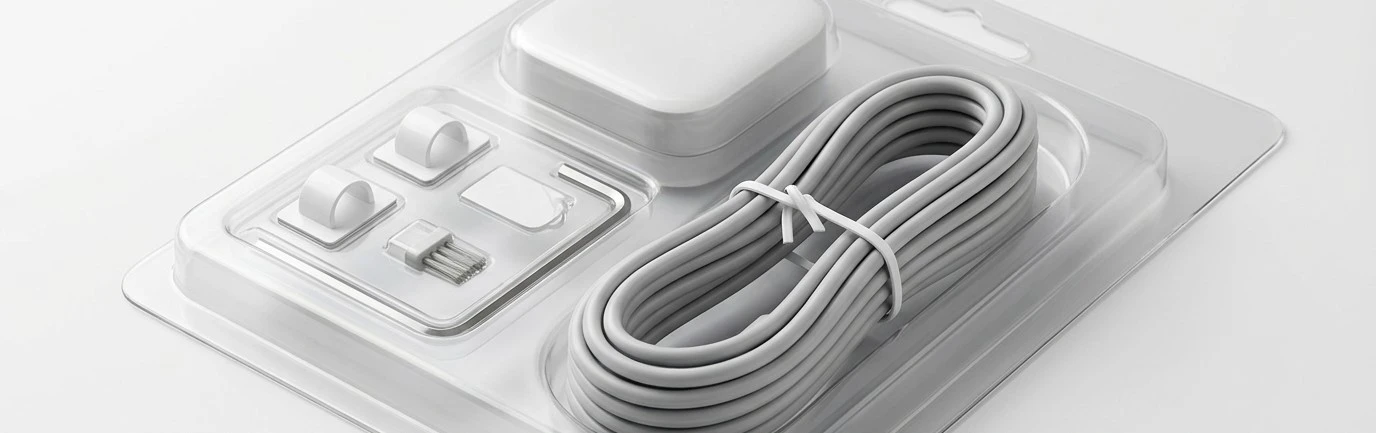
Some household products include a main item plus accessories, cables, or small replacement components. A twist tie can gather these smaller parts so they do not shift freely inside the package.
For example, a cable or a group of small parts can be held together within the retail packaging. This is an internal organization task. It is not a consumer cable management solution and should be considered only within the packaging context.
Supporting Retail Presentation
When items are grouped with a twist tie, they can remain aligned and orderly inside the package. This reduces loose components and helps the package present a more organized appearance. If the tie is visible, colored ties may contribute to the visual presentation, though the primary role remains functional.
Household Product Categories and Their Packaging Needs
Cleaning and Utility Products
Cleaning cloth sets, small brushes, lightweight cleaning accessories, and utility items supplied in bags often need bag closing or simple bundling. The twist tie keeps the bag closed or holds several small tools together as a set.
Storage and Organization Products
Storage bags, small organizers, grouped household accessories, and lightweight bundled components benefit from twist ties that keep multiple parts combined. This helps maintain the completeness of a set during transit and handling.
Cords and Small Accessories
Packaged cords, extension accessories, small cables, and household electronic accessories can be organized inside their retail packaging with a twist tie. The tie keeps the cord or cable gathered before or during retail packaging. This is a packaging application, not a daily-use cable management product.
Craft and Small Retail Goods
Craft materials, decorative accessories, small DIY components, and other small retail household goods may use twist ties when the package needs a simple removable closure or a way to keep several pieces together. The common factor is the packaging task, not the product category itself.
Bag Closing vs Product Bundling
|
|---|
These roles can overlap. A single package might use a twist tie to close a bag, bundle a set, and keep accessories organized at the same time.
Why Plastic Twist Ties Work for These Tasks
Flexible Around Different Shapes
Household products are often irregular or small. A twist tie can conform to different shapes and hold items that do not stack neatly.
Easy to Apply and Remove
Applying a twist tie typically involves a simple twisting motion, while removal usually involves untwisting. This can make it practical for packaging applications where a removable mechanical closure is appropriate.
Suitable for Both Closing and Bundling
Many closures are designed for one specific task. A twist tie can handle both bag closing and product bundling, which makes it useful across a range of household packaging needs.
Packaging Factors to Consider
Several variables affect whether a twist tie is appropriate for a household packaging application.
Product size and shape. A small part, a long item, and a bagged product each place different demands on the tie.
Closure or bundling task. The first question is whether the tie needs to close, bundle, or organize.
Package opening or bundle diameter. The tie must be long enough to wrap around the gathered bag neck or the group of items.
Handling requirements. Consider whether the closure or bundle needs to be adjusted, repositioned, opened, or reclosed during packaging, handling, or use.
Appearance. If the tie is visible as part of the packaging, its color and appearance may affect the overall presentation.
Once the packaging task is clear, the next step is to evaluate which twist tie characteristics are appropriate for the application.
When Another Packaging Closure May Be More Appropriate
Plastic twist ties are not suitable for every household product package. They may not be the right choice when the packaging requires:
- A permanent closure
- A heat-sealed package
- A closure integrated directly into the package
- Specific barrier or sealing performance
- A different closure format required by the packaging process
A twist tie is primarily a mechanical closing or bundling component. It should not be treated as a substitute for packaging systems designed to provide specific sealing or barrier properties. Understanding these limits helps ensure that twist ties are used appropriately and that expectations match their actual capabilities.
Frequently Asked Questions
Can plastic twist ties be used to close household product bags?
Yes, they can close bags that are suitable for a gathered-neck closure. The actual suitability depends on the bag structure and the packaging requirements. They are not designed for airtight or moisture-proof sealing.
Can plastic twist ties bundle several household items together?
Yes, they can bundle lightweight, small items that can be held as a group by wrapping the tie around them. This is common for sets of similar small products.
Are plastic twist ties suitable for every household product package?
No. Packaging that requires a permanent seal, specific barrier performance, or a specialized closure format should use an appropriate packaging method. Twist ties are best suited to applications where a simple mechanical closure or bundling solution is sufficient.
Conclusion
Plastic twist ties support household product packaging by helping to close bags, bundle multiple items, organize accessories inside a package, and maintain an orderly presentation. Their value comes from matching the tie to the packaging task. Once the packaging task is clear, the next step is to consider factors such as tie length, width, wire construction, and format when selecting a suitable plastic twist tie.


