

Driven by consumers' demand for convenience and environmental protection, bread twist ties, a seemingly ordinary sealing tool, are becoming an important medium for brands to communicate with users through detail innovation. This article analyzes how bread twist ties can meet the ever-changing market needs through design optimization and functional expansion from the perspectives of consumer behavior changes, market segmentation strategies and emerging scene exploration.
1. Consumer behavior changes: from functional needs to experience upgrades
Modern consumers' expectations for bread twist ties have gone beyond the basic sealing function:
a. Convenience first: In a fast-paced life, the design of twist ties that can be opened and closed with one hand and do not need to be torn is more popular. For example, a brand has launched a pre-bent tie, and consumers only need to press lightly to fix the bag opening, shortening the operation time by 30%.
b. Awakening of environmental awareness: Young consumer groups pay more attention to packaging sustainability. The penetration rate of recyclable metal core + paper coating tie ties in the European and American markets has increased year by year. Some brands attract environmentally friendly users by marking the "100% recyclable" logo.
c. Emotional experience: Consumers reuse cable ties (such as organizing data cables and making handicrafts), and brands enhance user stickiness by designing interesting copywriting (such as "Keep freshness and creativity").
2. Market segmentation strategy: accurately meet differentiated needs
Different consumer scenarios have unique requirements for cable tie functions:
a. Family scenario: Durability and reuse are equally important
• Family users prefer reusable cable ties. A company has launched a detachable design of silicone sleeve + metal core. After damage, only the silicone part needs to be replaced to reduce waste.
• In response to children's safety needs, some cable ties are designed with rounded corners to avoid scratch risks.
b. Baking workshop: efficiency and brand expression
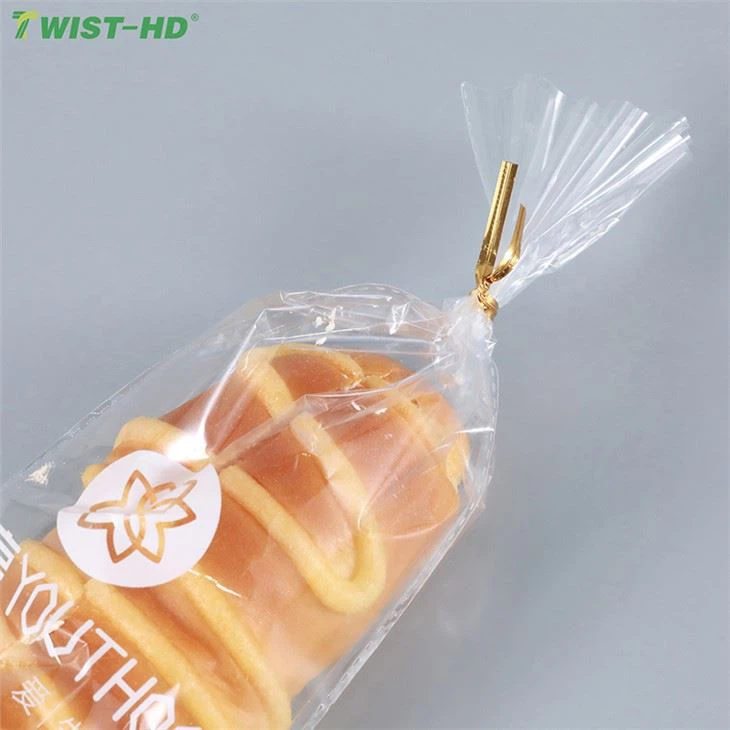
• Small bakery shops use customized cable ties with brand logos and baking temperature prompts, which not only enhance professionalism but also serve as marketing touchpoints.
• Pre-installed cable tie systems (such as cable tie rolls for automatic sealing machines) help stores save 50% of packaging time.
c. High-end gift market: ritual design
• Gift box bread with silk tie or hot stamping process, a French brand increased product premium by 25% through such design.
• Holiday limited edition tie (such as Mid-Autumn Festival theme print) strengthens seasonal consumption appeal.
3. Exploration of emerging scenarios: from kitchen to diversified life
a. The application boundary of bread tie continues to expand, becoming a cross-domain practical tool:
• Gardening: elastic tie replaces wire to fix seedlings to avoid damaging plant stems, and weather-resistant material adapts to outdoor environment.
• Office organization: bundling documents and wires, a company launched color-coded tie to help users quickly classify office supplies.
• Emergency use: outdoor enthusiasts use tie for temporary repair equipment (such as tent zipper), and the light and easy to carry feature is favored.
b. Case: A Japanese stationery brand improved bread tie into "writable label tie", users can directly mark the content with marker pen, and applied to laboratory sample management, with annual sales growth of 40%.
4. Pragmatic innovation under the trend of environmental protection
Enterprises respond to sustainable needs through material and process optimization:
• Application of recycled materials: Using recycled aluminum wire and bio-based coating, the carbon footprint of a European brand of cable ties is reduced by 35%.
• Lightweight design: Reducing the diameter of the metal wire and the thickness of the coating, the amount of material used per piece is reduced by 20%, and the strength remains unchanged.
• Closed-loop recycling pilot: Cooperating with community supermarkets to set up cable tie recycling boxes, consumers can return 10 cable ties to exchange for discount coupons, and the recycling rate has increased to 28%.
5. Future direction: user co-creation and data-driven
a. User participation in design: Collect cable tie ideas (such as color, function) through social media, launch limited joint models, and enhance brand interaction.
b. Intelligent light experience: Explore cable ties integrated with simple logos (such as color-changing indicator strips) to indicate the freshness of bread without complex technology.
c. Regional customization: Adjust the material formula according to climate differences (such as tropical vs. cold zones) to improve environmental adaptability.
Conclusion
The innovation of bread cable ties is essentially a deep response to user needs. From basic functions to emotional value, its design evolution confirms the market logic of "small tools, big insights". For companies that want to accurately reach their target groups, cooperating with suppliers with flexible customization capabilities (such as ZHENJIANG HONGDA COMMODITY CO.,LTD.) will be a key strategy to win the favor of consumers.
Contact information
ZHENJIANG HONGDA COMMODITY CO.,LTD.
Email: hongda@twistties.cn


