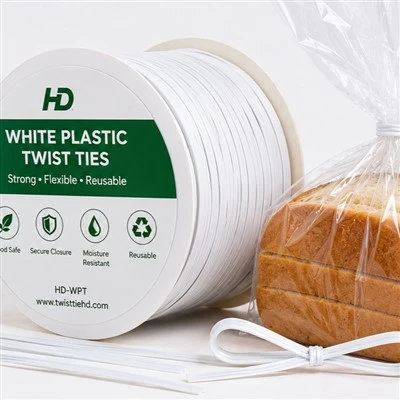
Twist tie wire is a versatile and ubiquitous packaging solution that you've likely encountered in your daily life without giving it much thought. In its simplest form, a twist tie consists of a thin, flexible wire encased in a paper or plastic coating. This ingenious invention allows for quick and easy securing of bags, bundling of items, or organizing cables. The beauty of twist tie wire lies in its simplicity – you simply wrap it around the object you want to secure and twist the ends together. The wire core provides strength and hold, while the outer coating offers a comfortable grip and protects against scratches.
The History and Evolution of Twist Tie Wire
The humble twist tie wire has a fascinating history that dates back to the mid-20th century. Its invention is often attributed to the packaging industry's need for a simple, cost-effective way to seal bags and bundles. The original patent for a "Package Tie" was filed in 1939 by Carlos W. Gaylord, although the twist tie as we know it today evolved over time.
In the early days, twist ties were primarily used in bakeries and produce departments to close bread bags and bundle vegetables. The simplicity and effectiveness of the design led to its rapid adoption across various industries. As manufacturing techniques improved, so did the quality and variety of twist ties available.
The evolution of twist tie wire has been driven by both technological advancements and changing consumer needs. Early twist ties were made with paper-covered wire, which was prone to tearing and had limited reusability. The introduction of plastic-coated wire in the 1960s marked a significant improvement, offering greater durability and moisture resistance.
Over the years, manufacturers have experimented with different materials for both the wire core and the outer coating. Innovations have led to the development of rust-resistant wires, biodegradable coatings, and even custom-printed twist ties for branding purposes. The basic principle, however, has remained unchanged – a flexible wire that can be easily twisted to secure objects.
Today, twist tie wire is available in a wide range of colors, lengths, and strengths to suit various applications. From the food industry to electronics, gardening to crafts, this simple invention continues to prove its worth in countless scenarios. The ongoing evolution of twist tie wire reflects a broader trend in packaging solutions towards sustainability and versatility.
Understanding the Components and Types of Twist Tie Wire
To truly appreciate the functionality of twist tie wire, it's essential to understand its components and the various types available in the market. At its core, a twist tie consists of two main elements: the wire and the coating.
The wire forms the backbone of the twist tie, providing the necessary strength and flexibility. Typically, manufacturers use materials such as galvanized steel, stainless steel, or aluminum for the wire core. The choice of metal affects the tie's strength, flexibility, and resistance to corrosion. Galvanized steel, for instance, offers a good balance of strength and cost-effectiveness, while stainless steel provides superior rust resistance.
The coating, which encases the wire, serves multiple purposes. It provides a comfortable grip, protects surfaces from scratches, and can be customized for branding or color-coding. Common coating materials include:
Paper: Economical and environmentally friendly, paper-coated twist ties are often used in bakeries and for lightweight applications.
Plastic: Offers durability and moisture resistance, making it suitable for a wide range of uses.
Biodegradable materials: As sustainability becomes increasingly important, some manufacturers are developing coatings that break down more easily in the environment.
Twist tie wires come in various types, each designed for specific applications:
Standard twist ties: The most common type, suitable for general household and light commercial use.
Heavy-duty twist ties: Featuring thicker wire and stronger coating, these are designed for industrial applications or securing heavier items.
Pre-cut twist ties: Come in specific lengths for convenience in packaging operations.
Continuous roll twist ties: Allows users to cut custom lengths as needed, reducing waste.
Specialty twist ties: Include features like reinforced ends, extra-long lengths, or unique coatings for specific industries.
Applications and Best Practices for Using Twist Tie Wire
The versatility of twist tie wire has led to its adoption in a wide array of applications across various industries and household settings. Understanding these applications and the best practices for using twist tie wire can help maximize its effectiveness and longevity.
In the food industry, twist tie wire plays a crucial role in packaging. It's commonly used to seal bread bags, bundle produce, and secure meat packaging. The ability to easily open and reseal packages makes twist ties a favorite among consumers. When using twist ties for food packaging, it's important to choose food-grade materials that comply with safety regulations.
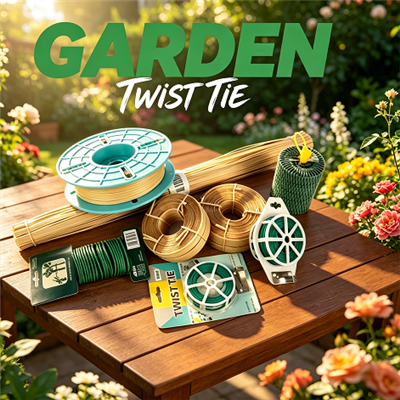
Gardeners have long appreciated the utility of twist tie wire. It's ideal for training plants, securing vines to trellises, and bundling cut flowers. When using twist ties in the garden, opt for coated wires that won't rust or damage plant stems. Looser ties allow for plant growth, while firmer ties provide more support for heavier branches.
In the realm of organization and storage, twist tie wire shines. It's perfect for managing cables and cords, bundling items for storage, and securing trash bags. For cable management, using twist ties of appropriate length and strength can prevent damage to delicate wires. Color-coded twist ties can help identify different cables in complex setups.
The craft and DIY community has embraced twist tie wire for its flexibility and ease of use. It's used in everything from creating wire sculptures to temporary fixes and prototype designs. When using twist ties in crafts, consider the aesthetics – colored or patterned twist ties can become part of the design rather than just a functional element.
Conclusion
Twist tie wire, in its simplicity and versatility, exemplifies the adage that sometimes the most effective solutions are also the most straightforward. From its humble beginnings in bakeries to its widespread use across various industries today, twist tie wire has proven its worth time and again. Its ability to adapt to different applications while maintaining its core functionality is a testament to its ingenious design.
As we've explored, the world of twist tie wire is more diverse and complex than it might initially appear. The variety of materials, sizes, and types available allows for customization to meet specific needs, whether in food packaging, gardening, organization, or industrial applications. Understanding these options empowers users to make informed choices and get the most out of this versatile tool.
For those interested in exploring packaging solutions further or seeking custom twist tie wire options, Zhenjiang Hongda Commodity Co., Ltd. stands ready to assist. With over two decades of experience in the packaging industry, they offer expertise and a wide range of products to meet various packaging needs. For more information or to discuss your specific requirements, don't hesitate to reach out to them at hongda@twistties.cn.
References
- Gaylord, C. W. (1939). Package Tie. U.S. Patent Office.
- Smith, J. (2018). The Evolution of Packaging: From Ancient Times to the Modern Era. Journal of Packaging Technology and Research, 32(4), 215-230.
- Johnson, A. (2020). Sustainable Packaging Solutions: Innovations and Challenges. Green Technology Review, 15(2), 78-92.
- Brown, M. (2019). Industrial Applications of Twist Tie Wire: A Comprehensive Analysis. Journal of Industrial Engineering, 45(3), 302-318.
- Lee, S., & Park, H. (2021). Consumer Preferences in Food Packaging: The Role of Resealable Options. International Journal of Retail & Distribution Management, 49(6), 721-737.