

Fresh produce is often bundled or packed for handling, distribution, and retail display. Plastic twist ties can be used for selected produce applications, including directly binding vegetables into bundles and closing flexible produce bags. They may suit leafy greens, bundled vegetables, small produce packs, and other applications that need a simple closure or binding method.
This guide explains how plastic twist ties fit into produce packaging and binding, which applications they may suit, and what to review before choosing a closure solution.
Why Are Twist Ties Used in Produce Packaging?
Simple Closure for Gathered Bag Openings
Some produce is packaged in flexible bags that can be gathered at the opening. A twist tie secures the gathered material without requiring a more complex closure system. This can be useful when bags are filled or portioned and need a simple way to close.
Convenient Manual Application
Twist ties can be applied by hand, making them suitable for selected produce packing tasks where bags are filled, gathered, and closed manually. They may be practical in small-scale packing, retail preparation, or similar workflows where a simple manual closure is appropriate.
Reopening and Reclosing During Use
Some produce bags are opened after purchase and closed again during use. Depending on the bag material and closure design, a twist tie can allow the opening to be adjusted, reopened, and reclosed when needed. The convenience of reopening depends on the packaging construction and how the tie is applied.
Suitable for Certain Flexible Packaging Formats
Plastic twist ties are generally considered for flexible packaging formats where the bag opening can be gathered and secured. Their suitability depends on the bag material, opening structure, produce weight, and handling requirements. They are not intended to replace packaging formats that require specialized sealing or rigid protection.
Common Produce Packaging Applications
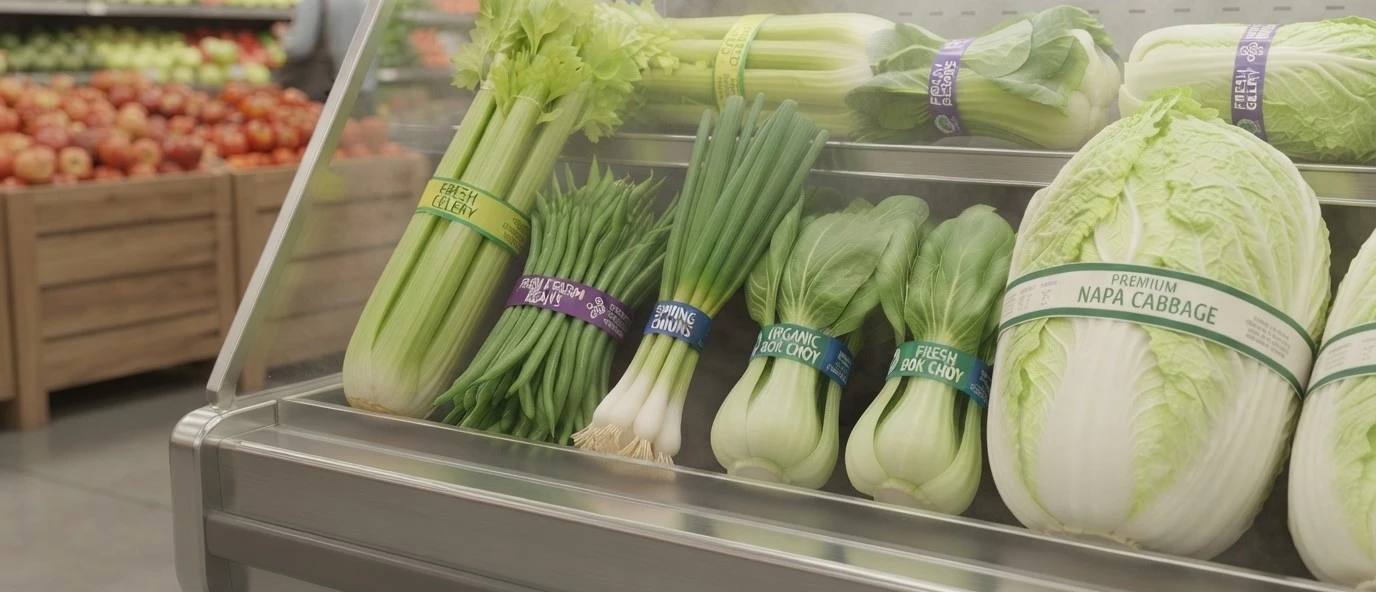
Direct Vegetable Binding
Plastic twist ties can be used to directly bind selected vegetables into bundles. This application is different from closing a produce bag because the twist tie is applied around the vegetables themselves rather than around a bag opening.
Leafy greens, herbs, spring onions, and other vegetables that are commonly handled or displayed in bundles may be suitable for this type of binding, depending on the produce and handling requirements.
The tie can help hold a group of vegetables together for preparation, handling, or retail presentation. The appropriate tie size and application method depend on the type, quantity, and shape of the produce being bundled.
For fresh vegetable binding applications, plastic vegetable twist ties can be considered when a simple direct binding method is required.
Vegetable Bags
Plastic twist ties may also be used to close flexible vegetable bags. After the vegetables are placed inside, the bag material can be gathered and secured with a twist tie, depending on the bag design and packaging requirements.
This application uses the twist tie as a bag closure rather than as a direct binding method. The suitability of the closure depends on the bag material, opening structure, produce weight, and handling requirements.
Fruit Bags and Small Produce Packs
Plastic twist ties may also be used for selected fruit bags and small produce packs. In these applications, the tie can help secure a gathered bag opening while allowing the package to be opened when necessary.
Whether a twist tie is appropriate depends on the type of produce, the packaging material, the weight of the contents, and the way the package is handled during distribution and use.
Farm-Fresh Produce and Market Packaging
In farm-fresh produce and market packaging, some vegetables and other agricultural products are prepared in bundles or flexible bags for sale or distribution. A twist tie may be used either to bind selected produce directly or to close a suitable bag opening.
The suitable closure or binding method depends on the packaging format, the amount of produce being handled, and the requirements for presentation and distribution.
Retail Produce Bags
Retail produce packaging may involve additional considerations beyond simply closing a bag. Depending on the packaging design, color, printed information, or other visual details may be used to support product identification and presentation.
For selected retail produce applications, a printed twist tie may be considered when customized printing is part of the packaging requirement.
A printed PET vegetable twist tie is one option to explore when customized printing is required for a produce packaging application.

How to Use Plastic Twist Ties for Produce Applications
For Direct Vegetable Binding
- Gather the Vegetables
Arrange the vegetables into the desired bundle. The quantity and arrangement should allow the twist tie to be applied without unnecessarily compressing or damaging the produce.
- Position the Twist Tie
Place the twist tie around the selected part of the vegetable bundle. Positioning depends on the type and shape of the produce and how the bundle will be handled.
- Secure the Bundle
Twist or fold the tie according to its design to hold the vegetables together. The closure should be secure enough for the intended handling without placing unnecessary pressure on the produce.
- Check the Binding
Check that the vegetables remain together and that the tie has not damaged the produce. If the bundle will be handled or displayed, the binding should also be appropriate for the intended presentation.
For Produce Bags
- Prepare the Produce Bag
Place the produce into a suitable bag and leave enough space at the opening for gathering and closing. The bag should be appropriate for the type and quantity of produce being packaged.
- Gather the Bag Opening
Gather the upper part of the bag after filling. Arrange the opening so that the packaging material can be secured without unnecessarily compressing or damaging the produce.
- Apply the Twist Tie
Place the twist tie around the gathered opening and twist or fold it according to the tie design to secure the bag. The closure should match the bag structure and the handling requirements of the packaged produce.
- Check the Closure
Check that the bag opening remains closed and that the packaging material has not been damaged during application. If the bag is intended to be reopened, the closure should also be practical to adjust during use.
Packaging Considerations for Produce Applications
Bag Material and Opening Structure
The bag material and opening structure are important when considering a twist tie for produce packaging. The bag should be flexible enough to gather and secure in the intended manner, and the closure should be compatible with the packaging design.
Produce Weight and Bag Size
The quantity and weight of the produce, as well as the size of the bag opening, can affect the closure requirements. A twist tie that works for a small produce bag may not be appropriate for a larger or heavier package.
These factors should be considered together rather than evaluated separately.
Bundle Size and Produce Structure
For direct vegetable binding, the size and structure of the produce bundle should also be considered. The tie should be suitable for the amount of produce being gathered and positioned in a way that holds the bundle without unnecessarily compressing the vegetables.
Closure Requirements
Different produce packaging applications may require different levels of closure. Some bags may only need a simple closure after filling, while others may need to be opened and closed again during use.
The appropriate solution depends on the packaging format and the way the product is expected to be handled.
Packaging Appearance and Customization
For some retail produce packaging, appearance and product identification may also be considered alongside closure function. Depending on the packaging design, colored or printed twist ties may be used to support a more customized presentation.
If customized printing is part of the requirement, a printed PET vegetable twist tie may be worth evaluating alongside the bag material, closure format, and overall packaging design.
Ventilation and Storage Requirements
Produce packaging may also need to account for ventilation, temperature, moisture, and storage conditions. These requirements depend on the type of produce and the overall packaging design.
A twist tie primarily serves as a mechanical closure or binding method and should not be treated as a substitute for suitable packaging materials, ventilation design, or proper storage conditions.
When Are Plastic Twist Ties Suitable for Produce Packaging?
Plastic twist ties may be suitable for selected produce applications that require direct vegetable binding or closure of flexible bags. For direct binding, the produce should be suitable for being gathered and secured without unnecessary compression or damage. For bag closure, the packaging should have a flexible, gatherable opening that can be secured with a twist tie.
Their suitability depends on the type and quantity of produce, bag material where applicable, binding or opening structure, and handling requirements.
For packaging that requires specialized sealing, rigid protection, or other specific functions, a different packaging solution may be more appropriate.
FAQ About Twist Ties for Produce Packaging
Can plastic twist ties be used to bind vegetables directly?
Yes. Plastic twist ties can be used for selected vegetable binding applications where vegetables are arranged into bundles and can be secured without unnecessary compression or damage. The appropriate binding method depends on the type, quantity, and handling requirements of the produce.
Can plastic twist ties be used for vegetable bags?
Yes. Plastic twist ties can also be used for selected vegetable bag applications where the bag opening can be gathered and secured. The bag material, produce weight, and closure requirements should be considered before use.
Are twist ties suitable for fruit packaging?
They may be suitable for certain fruit bags and small produce packs, depending on the packaging format. Not all fruit packaging uses a gatherable bag opening or requires the same type of closure.
Can produce bags be reopened after using a twist tie?
In some applications, a produce bag can be reopened and closed again by adjusting the twist tie. The convenience of doing so depends on the bag material, closure design, and how the tie is applied.
Do twist ties keep produce fresh?
Twist ties are primarily used to close bag openings or bind selected produce. They do not independently guarantee freshness or extend shelf life. Produce freshness depends on factors such as the product itself, packaging materials, ventilation, temperature, and storage conditions.
What should I consider when choosing a twist tie for produce applications?
Consider whether the tie will be used for direct produce binding or bag closure, as well as the produce type, quantity, bag material where applicable, opening or bundle structure, closure requirements, and whether the packaging needs to be reopened.
Explore Vegetable Twist Tie Options
For produce applications that require direct vegetable binding or a simple bag closure, plastic twist ties can be considered for selected vegetables, produce bundles, and flexible packaging formats. The appropriate option depends on the produce type, binding or bag structure, handling requirements, and customization needs.
To review options for produce packaging and vegetable binding, see our vegetable twist tie products.


