

Introduction
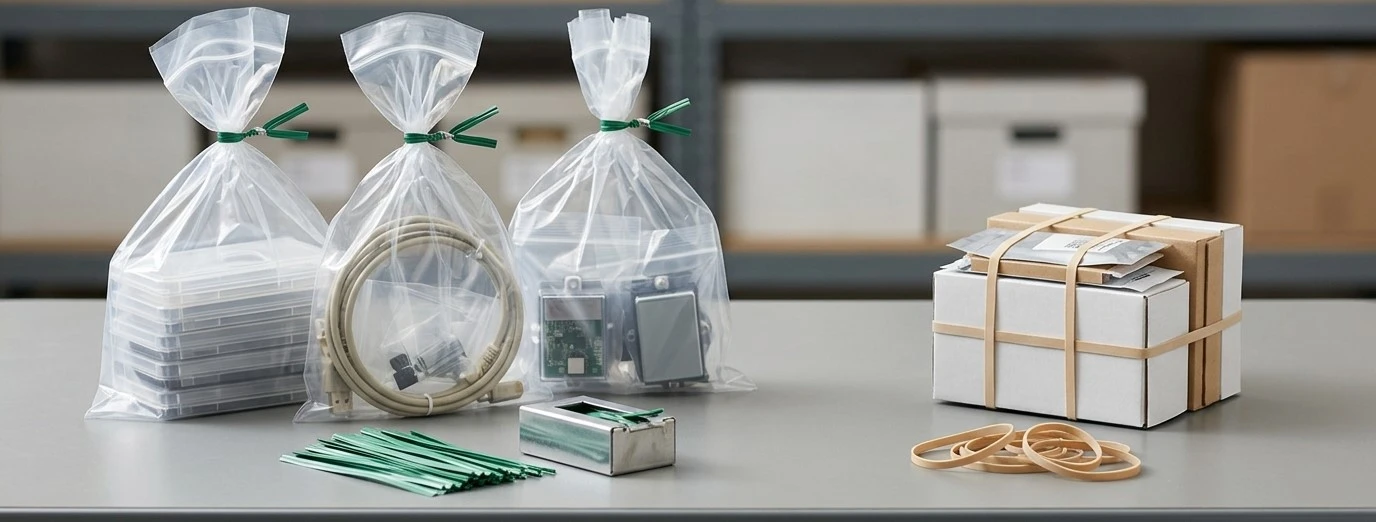
Both plastic twist ties and rubber bands can be used to secure bags, bundles, and packages, but they close items through different physical mechanisms. A plastic twist tie holds its shape after bending and twisting. A rubber band applies elastic tension after being stretched around an object.
For packaging decisions, the more practical questions are: How will the bag opening be fixed? Is the closure operation convenient for the user? Which method fits the specific package, item, and workflow? The answer depends on the packaging application rather than on a general claim that one option is stronger, cheaper, or better for every use.
What Is a Plastic Twist Tie?
A plastic twist tie generally consists of a flexible metal core covered by an outer layer. It is used by gathering a bag opening or bundle, wrapping the tie around the gathered material, and then bending or twisting it to hold the closure in place.
Twist ties can be used in various bagged packaging applications. Their suitability depends on the specific product specifications and the structure of the bag opening.
What Is a Rubber Band?
A rubber band is an elastic loop that secures objects by stretching around them and then contracting. When placed around a bag opening or a group of items, the band's elastic recoil creates inward pressure that helps hold the items together.
Its holding performance depends on factors such as size, elasticity, material condition, and the shape of the object being secured. Not all rubber bands are made from natural rubber, and not all products have the same elasticity or durability.
Plastic Twist Tie vs Rubber Band: Key Differences
| Comparison Area | Plastic Twist Tie | Rubber Band |
|---|---|---|
| Primary packaging use | Closing gathered bag openings or securing bundles where a twisted shape can hold | Bundling or encircling items and bag openings that accept elastic tension |
| Closure action | Bend and twist around gathered material | Stretch and place around an object; elastic recoil holds it |
| Best-suited package or item shape | Flexible bag openings that can be cinched; items that can be twisted together | Items or openings that can be encircled and tolerate inward pressure |
| Tension behavior | Holds through the bent or twisted shape; no continuous elastic tension | Applies continuous inward pressure as the band tries to return to its original size |
| Adjustability | Closure can be adjusted by adding or removing twists | Tension depends on band size and stretch; position may shift |
| Reopening | Typically requires unbending or untwisting | Typically requires stretching, shifting, or removing the band |
| Reuse considerations | Depends on metal core and outer covering condition | Depends on retained elasticity and overall band condition |
| Selection factors | Tie length, flexibility, and bag opening structure | Band size, elasticity, and object shape or surface |
The table describes structural and operational differences. It does not indicate that either option is universally stronger, more durable, or more cost-effective.
When Are Plastic Twist Ties Suitable for Packaging?
Bags That Need a Twist-Based Closure
A plastic twist tie may be suitable when a flexible bag opening can be gathered and secured by bending and twisting. A plastic twist tie may be suitable when a flexible bag opening can be gathered and secured by bending and twisting. Its performance depends on the bag material, the opening structure, and the length and flexibility of the tie. Explore our plastic twist ties for bag closure to review available options for your packaging application. It should not be assumed to provide an airtight, moisture-proof, or tamper-evident seal.
Packaging That Requires Visible, Adjustable Closure
A twist tie offers a visible closure that can be adjusted by adding or removing twists. The operator gathers the bag opening and twists the tie to secure it. The appropriate length depends on the size of the bag opening and the amount of material that needs to be gathered. This method may fit manual packaging workflows where a twisting action is practical.
Packaging With Repeated Opening and Closing Needs
For packages that are opened and closed repeatedly, consider whether the metal core deforms, whether the outer covering becomes damaged, and whether the tie can still hold the closure reliably. Reuse depends on the specific product and actual use conditions. If the twist tie no longer maintains its shape, it may need to be replaced.
When Are Rubber Bands Suitable for Packaging?
Bundling Items With a Suitable Shape
A rubber band may be suitable for items or packages that can be securely encircled by an elastic loop. The shape, surface, and compressibility of the items affect how well the band stays in place and how evenly pressure is applied.
Packaging That Benefits From Elastic Retention
The elastic recoil of a rubber band creates continuous inward pressure. This may help keep items aligned or reduce shifting within a bundle. Performance depends on the band's size, elasticity, material state, and the shape of the object being secured. It is not universally suitable for every package or item.
Situations That Require Careful Size Selection
Choosing the correct size is important. A band that is too large may not provide enough tension to hold the items securely. A band that is too small may be overstretched, which can reduce its useful life or cause breakage. The result depends on the specific product specifications.
How to Choose Between Plastic Twist Ties and Rubber Bands
Use a concise checklist based on the actual packaging application:
- Bag opening and package shape: Can the opening be gathered and twisted? Or is it better suited to being encircled by an elastic band?
- Closure action and operator needs: Is a twisting motion practical, or is a stretch-and-place action more suitable for the user, pace, and dexterity required?
- Opening frequency and reuse: How often will the package be opened? Will the closure maintain reliable function after repeated use? Check its condition regularly.
- Packaging workflow and testing: Consider the number of operation steps and any tool requirements. Test the closure with the actual bag, item, and packaging conditions rather than relying only on product name or appearance.
Which Is Right for Your Packaging?
If the packaging requires a gathered bag opening to be secured by bending and twisting, evaluate a plastic twist tie. If the item or bag opening is suited to elastic encircling, evaluate a rubber band. For food packaging, frequent opening and closing, or specific packaging materials, verify applicable specifications, actual performance, and relevant requirements. Not all twist ties or rubber bands are intended for direct food contact, so check product suitability for the intended use. The right closure method is the one that works reliably for the specific packaging need, as confirmed through practical testing.
If a twist-based closure fits your application, review our plastic twist tie product options to compare available formats and specifications.


