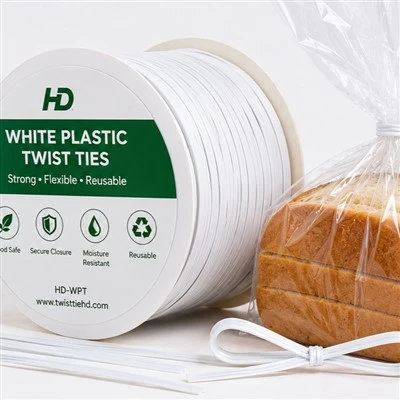
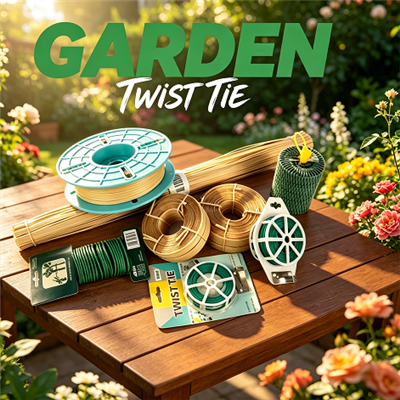
In the pursuit of sustainable packaging, paper vegetable twist ties have attracted widespread attention due to their environmentally friendly characteristics. However, in addition to their significant ecological value, the potential for supply chain efficiency improvement and operating cost optimization demonstrated by these ties in practical applications is also worthy of attention from enterprises. From a pragmatic perspective, this article explores how paper ties can bring tangible benefits to the daily operations of enterprises.
1. Transportation and warehousing advantages brought by lightweight design
Significantly reduce the weight of packages: Compared with traditional plastic ties or thicker rubber rings, paper vegetable twist ties are lightweight. When companies use them on a large scale to bundle vegetables, baked goods, bouquets, or as lightweight packaging seals, this small weight difference accumulates to a considerable amount. In long-distance or air transport scenarios, it can directly reduce fuel consumption and freight costs.
Optimize storage space: Paper ties are usually supplied in compact reels or bundles, which are much smaller than bulk plastic ties or bags of rubber bands. This effectively saves valuable storage space in factories or distribution centers and reduces inventory management pressure.
Reduce transportation emissions (indirectly): Lightweight packaging materials reduce the overall weight of goods, which means less energy is required to transport the same amount of products, indirectly reducing the carbon emissions of the company's logistics links, in line with increasingly stringent supply chain carbon management requirements.
2. Improve operational efficiency and reduce losses
Simplify the operation process: The use of paper vegetable twist ties is similar to that of traditional plastic ties (twisting and fixing). Workers can quickly get started without additional training and seamlessly integrate into the existing packaging line process to avoid the decline in production efficiency caused by the replacement of auxiliary materials.
Reduce entanglement and damage: Compared with thin plastic ropes or some rubber bands, well-designed paper ties can reduce the marks and physical damage to the surface of products when bundling fruits and vegetables (such as asparagus, green onions, beans) or delicate items, and reduce the loss rate of goods caused by packaging.
Easy to handle and clean: In the sorting and packaging area, scattered paper ties are easier to clean than plastic or rubber bands, and will not entangle cleaning tools. Even if it is accidentally mixed into the product, its natural material makes consumers feel more at ease than plastic.
3. Stability in responding to regulations and meeting downstream demand
Avoiding the risk of plastic bans: Global bans and plastic restrictions on disposable plastics are increasing and becoming stricter (such as the EU SUP directive and plastic restrictions in some parts of China). The early adoption of mature alternatives such as paper ties can effectively avoid the packaging material switching costs, compliance risks and potential fines caused by sudden changes in regulations in the future.
Satisfying retail and consumer preferences: Large supermarkets, high-end fresh supermarkets and consumers who pay attention to the quality of life are increasingly inclined to choose products with environmentally friendly packaging. The use of paper ties can directly respond to this downstream demand, enhance the "green" image of products on the shelves, and reduce sales resistance caused by packaging that does not meet channel or consumer expectations.
Simplifying waste management: For areas with back-end composting facilities or organic waste collection requirements (commonly used in the treatment of kitchen waste), the use of paper ties that can be home-composted or industrially composted can be handled together with vegetable and fruit residues, simplifying the classification process for consumers and waste treatment plants and improving overall waste management efficiency.
4. Choose a reliable supplier to ensure application effect
The performance of paper vegetable twist ties (such as dry/wet strength, flexibility, tensile strength) directly affects its use experience and cost-effectiveness. It is crucial to choose a supplier with mature production technology and strict quality control.
Technical points: High-quality paper ties need to balance environmental protection and functionality. For example:
Basic strength: Ensure that the product can be firmly bundled and not easily broken during regular transportation.
Moderate waterproofness: For cold chain or humid environments (such as refrigerated vegetable packaging), the paper needs to be properly treated to maintain basic strength when exposed to condensed water in a short period of time to avoid softening and failure (but it can still be biodegradable in the end). This does not require complete waterproofing, but to ensure reliability in the expected use environment.
Printing adaptability: If brand exposure is required, the ink should be environmentally friendly and non-toxic, and the printing should be clear and firm.
Supplier experience: Suppliers with rich production experience and stable supply chains (such as Zhenjiang Hongda Commodity Co., Ltd., which has more than 20 years of industry experience) can provide products that meet actual application needs and have stable quality, and can provide professional advice on technical details to help companies smoothly transition and apply.
Conclusion
The value of paper vegetable twist ties lies not only in its "green" label, but also in the actual benefits it brings to companies, such as improved supply chain efficiency, optimized operating costs, and regulatory risk avoidance. At a time when the environmental protection trend is irreversible, incorporating it into the packaging strategy is a pragmatic choice that takes into account environmental responsibility and economic rationality. Companies should pay attention to the basic performance indicators of the product and choose to cooperate with suppliers with reliable technology and rich experience to ensure that this transition is smooth and efficient, and ultimately achieve a win-win situation for environmental and economic benefits.