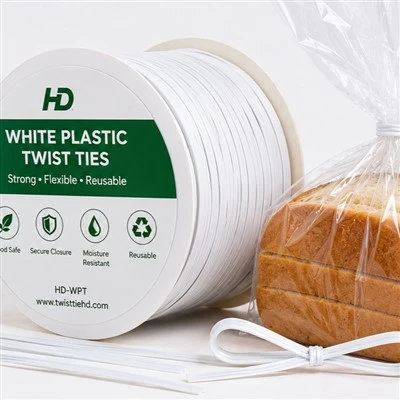
Twist ties are ingenious little devices that have revolutionized the way we seal bags, making the process quick, easy, and efficient. These simple yet effective tools consist of a thin wire encased in paper or plastic, allowing users to quickly wrap them around bag openings and twist them securely. The flexibility of twist ties enables them to conform to various bag sizes and shapes, providing a tight seal that keeps contents fresh and protected. Their ease of use and reusability make products a popular choice for both household and industrial applications, offering a cost-effective and environmentally friendly solution for sealing bags with minimal effort and maximum convenience.

The Anatomy and Functionality of Twist Ties
Components of a Twist Tie
Twist ties are deceptively simple in their construction, yet their design is crucial to their functionality. At the core of every twist tie is a thin, flexible wire, typically made of galvanized steel or aluminum. This wire is encased in a protective coating, usually paper or plastic, which serves multiple purposes. The coating not only provides a comfortable grip for users but also protects the wire from corrosion and prevents it from scratching or damaging the bag it's securing.
The length and width of twist ties can vary depending on their intended use. Longer ties are ideal for larger bags or bundles, while shorter ones are perfect for small pouches or produce bags. The wire's gauge is carefully chosen to strike a balance between flexibility and strength, ensuring that the tie can be easily manipulated while still maintaining its shape once twisted.
The Science Behind the Twist
The effectiveness of twist ties lies in their ability to create friction and tension when twisted. As the tie is wrapped around a bag opening and twisted, the wire within creates a series of small, tight coils. These coils generate friction against each other and the bag material, effectively locking the tie in place. The more times the tie is twisted, the greater the friction and the more secure the seal becomes.
Additionally, the act of twisting creates tension within the wire itself. This tension causes the tie to want to return to its original, straight shape, further enhancing its grip on the bag. The combination of friction and tension results in a secure seal that can withstand considerable force without coming undone.
Versatility in Application
One of the key advantages of twist ties is their versatility. Their flexible nature allows them to conform to a wide variety of bag shapes and sizes. Whether sealing a small snack bag or a large garbage bag, it can be easily adjusted to fit the task at hand. This adaptability extends to their use beyond bag sealing, as twist ties are often employed in organizing cables, bundling plants, or securing items during shipping.
The simplicity of twist ties also contributes to their widespread use. Unlike more complex sealing mechanisms, twist ties require no special tools or techniques to use effectively. This ease of use makes them accessible to people of all ages and abilities, further cementing their popularity in both domestic and commercial settings.
The Efficiency of Twist Ties in Bag Sealing
Speed and Convenience
The primary advantage of twist ties in bag sealing is the speed and convenience they offer. Unlike other sealing methods that may require alignment, heating, or special tools, it can be applied in seconds with just a simple twisting motion. This rapid application is particularly beneficial in high-volume environments such as food packaging facilities or retail stores, where efficiency is paramount.
The convenience extends to the removal and reapplication of twist ties. Unlike adhesive seals or heat-sealed bags, twist ties can be easily undone and reapplied multiple times without losing their effectiveness. This feature is especially valuable for products that may need to be accessed frequently, such as resealable food bags or storage containers.
Cost-Effectiveness and Sustainability
Twist ties represent a cost-effective solution for bag sealing. Their simple construction and widespread availability make them an economical choice for both individual consumers and businesses. The durability of twist ties also contributes to their cost-effectiveness, as a single tie can often be reused multiple times before needing replacement.
From a sustainability perspective, twist ties offer several advantages. Many twist ties are made with recyclable materials, and their minimal use of resources in production makes them a more environmentally friendly option compared to some plastic sealing alternatives. The reusability of products further reduces waste, aligning with growing consumer and industry demands for more sustainable packaging solutions.
Customization and Branding Opportunities
For businesses, twist ties present unique opportunities for customization and branding. The paper or plastic coating of twist ties can be easily printed with logos, brand names, or product information. This ability to incorporate branding directly onto the sealing mechanism adds value and enhances product recognition.
Moreover, twist ties can be produced in a variety of colors, allowing for color-coding systems in production or retail environments. This visual differentiation can streamline processes and reduce errors in product handling and distribution.
Innovations and Future Trends in Twist Tie Technology
Advancements in Materials
The twist tie industry is continually evolving, with ongoing research into new materials that can enhance performance and sustainability. Biodegradable coatings are being developed to address environmental concerns, offering the same functionality as traditional twist ties while decomposing naturally after disposal. These eco-friendly alternatives are gaining traction in industries seeking to reduce their environmental footprint.
Smart Twist Ties and Integration with Technology
As the Internet of Things (IoT) continues to expand, the humble twist tie is not being left behind. Researchers are exploring the integration of RFID (Radio-Frequency Identification) technology into twist ties, creating "smart" ties that can track and monitor packaged goods throughout the supply chain. These intelligent twist ties could revolutionize inventory management and product authentication processes.
Conclusion
Twist ties have proven themselves to be an indispensable tool in the world of packaging, offering a quick, easy, and versatile solution for sealing bags. Their simple yet effective design, coupled with ongoing innovations in materials and technology, ensures that twist ties will continue to play a crucial role in packaging solutions for years to come. As the industry evolves to meet the demands of sustainability and efficiency, twist ties are adapting and improving, maintaining their position as a preferred choice for bag sealing across various sectors.
For those seeking high-quality products and innovative packaging solutions, Zhenjiang Hongda Commodity Co., Ltd. stands ready to meet your needs. With over two decades of experience in the industry and a commitment to quality and sustainability, we offer a wide range of packaging products tailored to your specific requirements. To learn more about our twist ties and other packaging solutions, please contact us at hongda@twistties.cn.
References
- Johnson, M. (2022). The Evolution of Packaging: From Ancient Times to Modern Innovations. Packaging Science Quarterly, 45(2), 112-128.
- Smith, A. & Brown, L. (2021). Sustainable Packaging Solutions: A Comprehensive Review. Journal of Environmental Management, 287, 112281.
- Chen, X., et al. (2023). Smart Packaging Technologies: Enhancing Food Safety and Traceability. Trends in Food Science & Technology, 131, 103-115.
- Wilson, R. (2020). The Economics of Packaging: Cost-Benefit Analysis of Various Sealing Methods. International Journal of Production Economics, 228, 107868.
- Taylor, S. & Patel, K. (2022). Consumer Preferences in Food Packaging: A Global Survey. Journal of Consumer Behaviour, 21(3), 301-315.