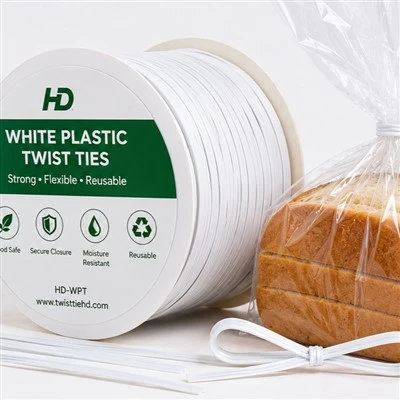
For purchasing managers and packaging engineers, selecting the right custom twist tie supplier is about much more than comparing prices. A reliable supplier helps reduce machine downtime, ensures consistent product quality, supports global regulatory compliance, and provides flexible customization that strengthens brand identity.
Whether your company packages artisan bread, frozen foods, coffee bags, confectionery, vegetables, or other food products, choosing the right manufacturing partner can improve both operational efficiency and long-term supply chain stability.
This guide explains the most important technical, manufacturing, and commercial factors professional buyers should evaluate before selecting a custom twist tie manufacturer.
Why Choosing the Right Twist Tie Supplier Matters
Twist ties may represent only a small percentage of total packaging costs, but they directly affect packaging performance throughout the production process.
Poor-quality twist ties can cause unexpected machine stoppages, inconsistent sealing, damaged packaging, or customer complaints. These hidden costs often exceed the initial savings gained from purchasing lower-priced products.
A professional supplier delivers more than finished products. They provide stable manufacturing processes, consistent raw materials, quality documentation, engineering support, and reliable delivery schedules that help food manufacturers maintain uninterrupted production.
When evaluating suppliers, buyers should focus on long-term value instead of unit price alone.
Common Problems Buyers Face When Purchasing Twist Ties
Many procurement teams encounter similar challenges after switching suppliers based solely on price.
Common issues include:
- Inconsistent wire diameter causing automatic machine jams
- Paper or plastic layers separating during twisting
- Weak wire strength leading to poor sealing performance
- Color inconsistency between production batches
- Printed logos fading or becoming blurry
- Delayed deliveries disrupting packaging schedules
- Missing FDA or LFGB documentation for export markets
- Limited OEM customization capabilities
- Poor communication during product development
- Unstable product quality across multiple orders
These issues increase production costs, reduce packaging efficiency, and negatively affect customer satisfaction.
Choosing an experienced manufacturer helps eliminate these risks before they impact production.
1. Verify Food-Grade Compliance and Product Safety
Food safety should always be the first consideration when selecting any packaging component.
Although twist ties typically do not have direct contact with food, they are commonly used on bread bags, bakery packaging, coffee bags, produce packaging, and other food applications. As a result, buyers often require suppliers to demonstrate compliance with international food-contact regulations.
A qualified manufacturer should provide complete documentation supporting the safety of its materials and production processes.
Important certifications may include:
- FDA food-contact compliance
- LFGB compliance for European markets
- SGS testing reports
- RoHS compliance
- REACH compliance where required
- Material Safety Data Sheets (MSDS)
- Product specifications and inspection reports
Working with certified suppliers simplifies customs clearance, customer audits, and retailer approval processes while reducing regulatory risks.
2. Evaluate Raw Material Quality

The performance of a twist tie begins with its raw materials.
High-quality materials provide better flexibility, stronger sealing performance, longer service life, and improved compatibility with automated packaging equipment.
Professional manufacturers typically offer several material options depending on the packaging application.
| Material | Advantages | Typical Applications |
|---|---|---|
| Paper Twist Tie | Eco-friendly, printable, natural appearance | Bread bags, bakery products, organic food |
| PET Twist Tie | Moisture resistant, glossy finish, durable | Frozen foods, confectionery, industrial bakery |
| PVC / PE Twist Tie | Flexible, economical, colorful | General food packaging |
| Double Wire Twist Tie | Extra holding strength | Large bags, heavy packaging |
| Printed Twist Tie | Brand promotion and product identification | Retail packaging |
Each material offers different performance characteristics in terms of flexibility, moisture resistance, printability, sustainability, and machine compatibility.
A knowledgeable supplier should recommend the most appropriate solution based on your packaging requirements rather than promoting a single product for every application.
3. Assess Manufacturing Precision
Manufacturing consistency has a direct impact on packaging line efficiency.
Even minor variations in wire diameter, coating thickness, or lamination quality can cause problems on high-speed packaging equipment.
Professional manufacturers invest in automated production lines, precision quality control systems, and standardized manufacturing procedures to maintain consistent product performance.

Key technical indicators include:
Consistent Wire Diameter
Uniform wire thickness ensures smooth twisting performance and minimizes machine stoppages.
Strong Lamination
The paper or plastic coating should remain firmly bonded to the internal wire throughout repeated twisting cycles.
Stable Tensile Strength
The internal wire should bend repeatedly without breaking while maintaining sufficient holding force.
Smooth Surface Finish
A consistent surface improves print quality, reduces friction, and enhances machine feeding performance.
Accurate Length Control
Precision cutting ensures every twist tie meets customer specifications and maintains compatibility with automatic dispensing equipment.
Reliable manufacturers continuously monitor these characteristics throughout production rather than relying solely on final product inspection.
4. Consider Compatibility with Automatic Packaging Machines
Automation continues to reshape the global food packaging industry.
Large bakeries and food processing facilities increasingly depend on automatic twist tie machines to improve production efficiency, reduce labor costs, and maintain consistent packaging quality.
However, automated systems require highly consistent packaging accessories.
Low-quality twist ties may lead to:
- Feeding failures
- Wire breakage
- Poor twisting consistency
- Increased machine maintenance
- Unexpected production downtime
- Higher operating costs
When evaluating suppliers, buyers should ask:
- Are the twist ties tested on automatic bag-closing machines?
- What machine brands are supported?
- Can spool dimensions be customized?
- Are different core sizes available?
- Can products be supplied in continuous rolls or pre-cut lengths?
- Are samples available for production testing?
A supplier experienced in automated packaging understands these requirements and can recommend products optimized for high-speed production environments.
5. Evaluate OEM and Customization Capabilities
Today's packaging serves not only to protect products but also to strengthen brand identity.
Many food manufacturers use custom twist ties as an extension of their packaging design, helping products stand out on retail shelves while improving product traceability.
An experienced OEM manufacturer should offer a wide range of customization options, including:
- Custom lengths
- Custom widths
- Pantone color matching
- Metallic finishes
- Multi-color stripe designs
- High-resolution logo printing
- Batch numbers
- QR codes
- Barcodes
- Expiration dates
- Production codes
- Retail-ready packaging
- Private label packaging
These customization options help businesses reinforce brand recognition while meeting operational requirements for inventory management and product tracking.
For international brands, consistent color matching and print quality across every production batch are essential to maintaining a professional image.

6. Evaluate Production Capacity and Supply Chain Stability
For food manufacturers, a reliable supplier is one that can deliver consistent quality on time-not just during normal operations, but also during seasonal demand peaks.
Bakery, confectionery, coffee, and fresh produce businesses often experience significant fluctuations in order volumes. A supplier with limited production capacity or unstable raw material sourcing can quickly become a bottleneck in your packaging operation.
When assessing a custom twist tie supplier, consider the following questions:
- Does the factory operate automated production lines?
- Can production capacity support large-volume or recurring orders?
- How are raw materials sourced and managed?
- What is the standard lead time for custom products?
- Is there sufficient inventory for standard items?
- Can emergency orders be accommodated?
- Does the supplier export regularly to multiple countries?
A manufacturer with established production planning and inventory management systems is better equipped to maintain consistent delivery schedules and minimize supply chain disruptions.
7. Examine the Quality Control System
Consistent product quality depends on systematic inspection throughout the manufacturing process rather than relying solely on final checks.
Professional manufacturers implement quality control procedures from raw material inspection through production and packaging to ensure every batch meets the required specifications.
Typical quality control measures include:
Incoming Material Inspection
Raw materials such as paper, PET film, plastic coatings, adhesives, and wire are verified before production begins.
In-Process Monitoring
Key production parameters-including wire diameter, coating thickness, lamination strength, and printing quality-are continuously monitored.
Finished Product Inspection
Each production batch is checked for:
- Dimensions
- Appearance
- Color consistency
- Wire flexibility
- Twist retention
- Packaging integrity
Traceability
Batch identification systems allow products to be traced back to raw materials and production records, helping customers meet food safety and quality management requirements.
A supplier with a documented quality management system provides greater confidence for long-term cooperation.
8. Consider Export Experience and Technical Support

International buyers often require more than competitive pricing. They also need suppliers who understand export documentation, regulatory requirements, and cross-border logistics.
An experienced export manufacturer should be able to provide:
- Commercial invoices
- Packing lists
- Certificates of origin
- Material specifications
- Compliance certificates
- Inspection reports
- Export packaging suitable for long-distance transportation
Technical support is equally important. A knowledgeable supplier can recommend suitable materials, dimensions, spool configurations, and printing options based on your packaging process and production equipment.
Working with an experienced export partner helps reduce communication issues, customs delays, and sourcing risks.
Comparison of Common Twist Tie Materials
| Material | Food Contact Suitability | Moisture Resistance | Printability | Machine Compatibility | Sustainability | Typical Applications |
|---|---|---|---|---|---|---|
| Paper Twist Tie | Excellent | Moderate | Excellent | Excellent | High | Bread bags, pastries, organic foods |
| PET Twist Tie | Excellent | Excellent | Excellent | Excellent | Moderate | Coffee, frozen food, confectionery |
| PE/PVC Twist Tie | Good | Good | Good | Excellent | Standard | General food packaging |
| Double Wire Twist Tie | Excellent | Excellent | Available | Excellent | Standard | Heavy-duty bags, large produce packaging |
Selecting the appropriate material depends on your packaging environment, production speed, branding requirements, and sustainability objectives. An experienced supplier should help evaluate these factors and recommend the most suitable solution rather than offering a one-size-fits-all product.
Buyer Checklist: How to Evaluate a Custom Twist Tie Supplier
Before placing an order, use the following checklist to compare potential suppliers.
✔ Food-grade compliance documentation available
✔ FDA, LFGB, SGS, or other relevant certifications
✔ Consistent wire diameter and product dimensions
✔ Stable lamination quality
✔ Compatible with automatic packaging machines
✔ OEM printing and customization capabilities
✔ Pantone color matching support
✔ Strong production capacity
✔ Documented quality management procedures
✔ Export experience in international markets
✔ Flexible MOQ options
✔ Reliable lead times
✔ Technical support before and after purchase
✔ Sample testing available
✔ Long-term supply chain stability
Evaluating suppliers using objective criteria helps reduce sourcing risks and supports successful long-term partnerships.
Why Choose Twist-HD as Your Custom Twist Tie Supplier
Choosing the right supplier is about building a reliable manufacturing partnership rather than simply purchasing a packaging accessory.
With decades of manufacturing experience, Twist-HD (Zhenjiang Hongda Commodity Co., Ltd.) supplies custom twist ties to food packaging manufacturers, bakeries, coffee roasters, produce packers, and industrial distributors worldwide.
Our manufacturing advantages include:
- Advanced automated production and lamination equipment
- Consistent wire processing and dimensional control
- OEM and private label manufacturing
- High-quality logo printing and customized colors
- Flexible lengths, widths, and packaging options
- Support for automatic twist tie machines
- Strict quality inspection procedures
- FDA and other food-contact compliance support
- Experienced international export service
- Stable production capacity for long-term supply programs
Our engineering and sales teams work closely with customers to recommend packaging solutions that improve production efficiency, strengthen brand presentation, and support long-term business growth.
Frequently Asked Questions
1. What is the best material for food packaging twist ties?
Paper twist ties are commonly selected for bakery and organic products, while PET twist ties are preferred for moisture-sensitive applications such as coffee, frozen foods, and confectionery.
2. Can twist ties be customized with our company logo?
Yes. Custom options typically include logo printing, Pantone color matching, custom dimensions, batch numbers, and retail packaging, depending on your project requirements.
3. Are twist ties suitable for automatic packaging machines?
High-quality twist ties manufactured with consistent wire diameters and stable lamination are designed to operate reliably on automatic bag-closing equipment.
4. What certifications should a food packaging supplier provide?
Depending on your market, buyers commonly request FDA, LFGB, SGS, RoHS, REACH, and related food-contact compliance documentation.
5. Can I request samples before mass production?
Yes. Sample evaluation is recommended to verify compatibility with your packaging materials and production equipment before placing volume orders.
6. What industries commonly use custom twist ties?
Applications include bakery, coffee, confectionery, fresh produce, frozen foods, snack foods, gift packaging, and industrial packaging.
7. How can I ensure consistent quality between production batches?
Choose a manufacturer with standardized production processes, documented quality management, and strict inspection procedures throughout manufacturing.
8. What factors affect the minimum order quantity?
MOQ depends on product specifications, material selection, printing requirements, custom colors, and packaging configuration.
9. How do custom twist ties support brand marketing?
Printed twist ties reinforce brand identity by displaying logos, colors, promotional messages, or product information directly on the packaging closure.
10. What should I look for in a long-term packaging supplier?
Beyond price, evaluate manufacturing capability, quality control, certifications, technical support, customization options, delivery reliability, and international export experience.
Conclusion
Selecting a reliable custom twist tie supplier is an investment in packaging quality, production efficiency, and long-term supply chain stability.
Rather than focusing solely on unit price, professional buyers should evaluate food safety compliance, manufacturing consistency, automation compatibility, OEM capabilities, quality management, and export experience. A supplier that consistently delivers reliable products and responsive technical support can help reduce operational risks while strengthening brand competitiveness.
Whether you manufacture bakery products, coffee, confectionery, fresh produce, or other packaged foods, choosing an experienced manufacturing partner will contribute to smoother production processes and greater confidence throughout your supply chain.
If you are looking for customized twist ties engineered for food packaging applications, the Twist-HD team is ready to provide product recommendations, technical consultation, and sample support tailored to your packaging requirements.