


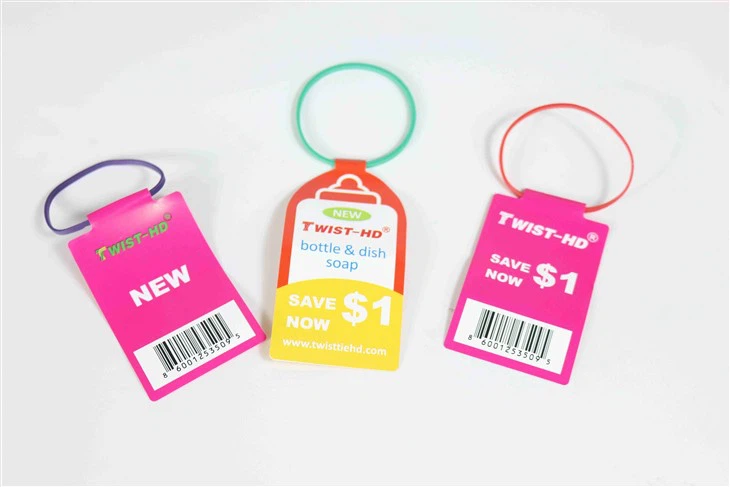
Amidst continuous innovation and lean management in the packaging industry, a multifunctional packaging solution combining traditional cable ties with barcode technology is attracting attention from companies across multiple sectors for its practical and efficient features. This solution not only leverages the practical value of cable ties for packaging, securing, and organizing, but also, through the introduction of barcode identification, effectively enhances the information management of products in circulation, warehousing, and sales. The following analyzes the industry value and development potential of this combination product from a practical application perspective.
From a basic functional perspective, cable ties, as a classic packaging accessory, offer simple structure, wide applicability, and manageable costs. They are commonly used for bundling and sealing food, daily necessities, electronic components, and industrial parts. Barcode technology, a core tool in modern supply chain management, enables the rapid and accurate recording and transmission of critical data such as product batch, production date, and category code. By combining the two, cable ties retain their physical binding function while printing a highly recognizable barcode on their surface, creating a "two-in-one" solution. This reduces the need for additional labels and operational errors caused by label detachment or mismatched information.
In practical applications, this type of product demonstrates broad industry applicability. For example, in food retail, products such as bread, fresh fruits and vegetables, and packaged prepared foods require frequent sealing and labeling. Integrated barcode cable ties not only provide reliable sealing but also facilitate quick scanning at checkout and inventory levels, improving store operational efficiency. In logistics and manufacturing, they can be used to bundle and simultaneously register assembled parts, samples, or shipping units, avoiding the misplacement, overlapping, and damage often associated with traditional adhesive labels. This solution is particularly suitable for e-commerce warehousing and distribution, auto parts, and chemical product management. Furthermore, in pharmaceutical and medical supply management, this product can meet certain sterile packaging, consumables traceability, and information compliance requirements by utilizing medical-grade materials and improving barcode printing accuracy.
This solution offers significant advantages in terms of cost-effectiveness and system compatibility. This product eliminates the need for companies to modify their existing barcode recognition systems; it can be read with standard barcode scanners, significantly lowering the barrier to entry and the cost of technology upgrades. Furthermore, by integrating two functions into one device, it reduces the number of packaging accessories and manual steps, helping companies streamline management and reduce overall packaging costs. Furthermore, these cable ties can be customized to meet specific usage scenarios, such as enhancing temperature resistance, UV resistance, moisture resistance, or degradation resistance to suit food contact, outdoor storage, or specialized chemical environments.
It is worth noting that the promotion of these products still faces some practical constraints. For example, barcode printing must ensure readability on curved and stretched surfaces; and the printed media must remain stable and resistant to fading in harsh environments (such as freezing, high humidity, or oily environments). Furthermore, different industries have specific regulations for the mechanical strength, chemical and biological safety, and environmental sustainability of packaging materials. This requires manufacturers to not only possess solid process technology but also a deep understanding of industry standards and user scenarios.
From a future perspective, cable ties with integrated barcodes can serve not only as standalone functional components but also as a preliminary step for companies to embrace IoT-enabled packaging. With the integration of richer data carriers like QR codes and RFID into strapping materials, these "smart cable ties" may also take on additional functions, such as anti-counterfeiting and traceability, process automation, and remote monitoring, further embedding themselves into digital supply chain systems.
In summary, the integrated design of cable ties and barcodes is a beneficial practice in the packaging industry's pursuit of functional integration and data connectivity. It addresses the practical needs of companies for cost reduction, efficiency improvement, and refined management, injecting new value from information technology into traditional packaging with relatively low technical barriers and retrofit costs. Currently, market suppliers like Zhenjiang Hongda Commodity Co., Ltd. have the ability to customize these products, offering solutions tailored to specific customer scenarios, including material selection, printing specifications, and functional design. For further information on the product's applicability and implementation in your industry, please contact hongda@twistties.cn for professional support.


