In the fast-paced baking production environment, packaging often becomes a bottleneck restricting output. Many medium and large-sized bakeries face a common problem: manually tying bread bags is not only time-consuming, but also results in inconsistent sealing tightness due to varying employee techniques, affecting the visual consistency of the finished product. Bread ties, though seemingly small, are a crucial link between production efficiency and customer experience. If the seal is not secure, air can enter the packaging bag, causing product oxidation and shortening shelf life; conversely, if the tie material is too stiff, it increases the difficulty of handling and may even injure consumers' fingers when opening.
## Hidden Cost Analysis of Traditional Manual Tying
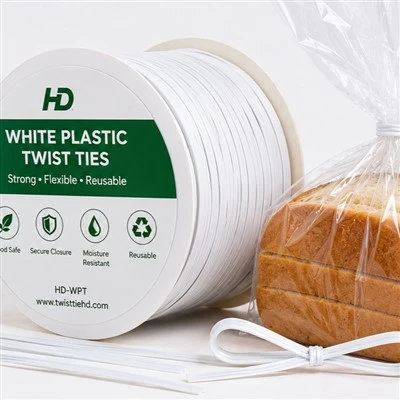
Most operators, when calculating costs, often only focus on raw material inputs, neglecting the hidden losses caused by repetitive labor. Using low-quality ties leads to frequent breakage, meaning employees need to repeat the operation, significantly reducing the number of units packaged per hour. Furthermore, the material of the cable ties directly affects the brand's shelf presentation. Plastic twist ties must possess sufficient flexibility to maintain their structural integrity after multiple twists without coating peeling or exposing the core.
## Physical Parameters for Improving Packaging Speed
To optimize production capacity, we need to focus on the physical properties of the cable ties:
- Torsional Springback: High-quality cable ties should lock firmly in place after two twists, maintaining their shape without additional force.
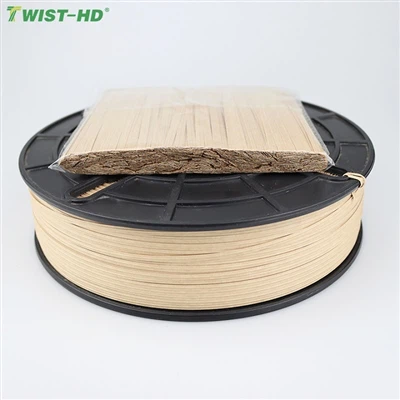
- Coating Adhesion: Whether paper or plastic, the outer layer must bond tightly to the inner core to prevent peeling during the high-speed operation of automated equipment.
- Length Consistency: Precise pre-cut lengths reduce waste and ensure a high degree of visual uniformity across all packaging.
## Real-World Case Study: A Chain Bakery Brand's Efficiency Doubling Path
A chain bakery in southern China found that its packaging team had a persistently high turnover rate after expanding its production scale. Research revealed that the previously used cable ties had excessively stiff inner wires, leading to severe hand joint strain from employees performing thousands of twisting movements daily. After switching to ergonomically designed, specialized bread ties, the twisting force of each tie decreased significantly. This not only alleviated employee fatigue but also improved individual packaging efficiency, while complaint rates dropped dramatically due to the tighter seals.
## Bread Ties: Proper Use and Selection Guide
1. Assess Packaging Bag Thickness: Thicker PE bags require longer ties to ensure they completely wrap around the bag opening and allow sufficient twisting slack.
2. Environmental Temperature Considerations: For frozen dough or refrigerated pastry packaging, choose low-temperature resistant plastic ties to prevent them from becoming brittle and breaking.
3. Brand Color Matching: Use multi-colored ties for production date management, such as blue for Monday and red for Tuesday. This is more cost-effective and less prone to peeling off than affixed labels.
## FAQ: Frequently Asked Questions about Bread Ties
- Q: Which is more durable, paper ties or plastic ties?
A: Plastic ties are better at preventing moisture damage, while paper ties are more suitable for handmade baked goods that require a natural feel.
- Q: Will the wire inside the ties rust?
A: Twist-HD uses rust-resistant galvanized wire, maintaining its performance even in humid kitchen environments.
- Q: How do I determine the correct ties length?
A: It is generally recommended that the ties be approximately three times the diameter of the bag neck.
- Q: Can these ties be used with automated ties machines?
A: Yes, we offer spool ties compatible with most automated sealing equipment.
- Q: Do the ties meet food contact standards?
A: All ties used in food packaging meet FDA and relevant environmental standards. - Q: Will the coating on metallic cable ties fade?
A: High-quality metallic cable ties use a PET composite film, locking the color within the film layer and preventing food contamination.
- Q: Are double-wire cable ties suitable for bread?
A: Double-wire ties are typically used for extremely heavy bulk grain bags; single-wire ties are sufficient for ordinary bread packaging.
- Q: Can cable ties be recycled?
A: Some plastic materials are recyclable, but due to the metal core, it is recommended to dispose of them as dry waste.
- Q: Will cable ties develop an odor when heated?
A: Under normal baking and storage temperatures, high-quality cable ties maintain stable performance and do not release any odor.
- Q: How should unused cable ties be stored?
A: They should be stored in a cool, dry place, avoiding direct sunlight to prevent plastic aging.
More Information You Can Contact: hongda@twistties.cn