The inconspicuous twist tie on the bread packaging bag is worth more than the basic function of "sealing". At a time when sustainable consumption and refined packaging are advocated, this small rope is quietly carrying more practical needs and industry trends.

1. Material innovation and pragmatic challenges under environmental protection demands
Exploration of degradable materials:
With the increasing awareness of environmental protection, some manufacturers have launched degradable twist ties made of bio-based materials such as PLA (polylactic acid). Such products can be decomposed under industrial composting conditions and meet EU EN 13432 and other standards. However, its actual promotion faces two major practical obstacles: one is that the cost is about 30% higher than that of traditional plastic-coated ropes, and the other is that it requires supporting garbage sorting facilities to play its environmental value. It is currently mainly used in the high-end organic bread market.
Design optimization for reuse:
Plastic-coated metal core twist ties have become a mainstream reusable choice due to their durability. Consumer feedback shows that a high-quality plastic-coated rope can be reused 5-8 times on average, significantly reducing packaging consumables. Manufacturers extend the life of the rope by thickening the plastic coating and optimizing the toughness of the metal core (such as using aluminum-zinc alloy to prevent rust), rather than simply promoting the "environmental protection concept".
2. Consumer psychology and behavioral insights
Implicit communication of color coding:
More than 60% of medium and large bakeries in North America use the "seven-day color system" (such as blue on Monday and green on Tuesday), and silently convey the production date through the color of the rope. Japanese research has found that this visual cue can increase consumers' trust in the freshness of bread by 28% and reduce waste caused by misjudgment of the date. Some domestic boutique bakeries have also begun to introduce this system.
Opening and closing experience affects brand awareness:
Consumer surveys show that 43% of users have negative brand associations with ropes that are difficult to tear or easy to break. On the contrary, flat plastic ropes (without metal cores) are flexible and do not hurt the hands, and twist smoothly. The penetration rate in high-end baking brands has increased by 15% year-on-year, reflecting the consumer psychology of "user experience is brand value".
3. Industry stratification and scene adaptation
Mass market: cost and efficiency first
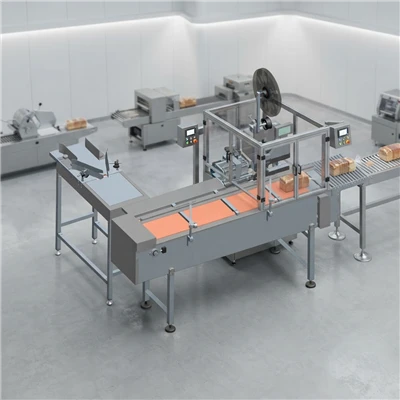
Traditional paper-wrapped metal core ropes still account for more than 70% of the global market share. Its core advantage is that the cost of a single rope is less than 0.01 yuan, and it is suitable for high-speed production lines (more than 300 bags can be processed per minute). Walmart and other supermarkets generally use this basic style of private-label bread.
Boutique baking: packaging becomes an extension of quality
Artisanal bakeries prefer to choose ropes that match the product tone: European bread often uses beige paper ropes to echo the rustic feeling, while gluten-free products are paired with green flat plastic ropes to convey a fresh and healthy image. This "packaging consistency" allows the customer unit price to increase by 5-10%.
Customized solutions for special needs
For large bread bags over 1 kg, the demand for extended ropes (20cm+) has increased; products exported to the EU must meet food-grade silicone coating standards; medical nutrition bread uses all-PET materials to avoid the risk of metal precipitation. Although this type of special product accounts for less than 5%, the gross profit margin can reach 3 times that of ordinary products.
4. Practical use suggestions
Freezing storage tips:
When using plastic coated rope, fold the bag mouth and spirally wrap it 3 times before twisting it. It is 50% more airtight than simply knotting it, effectively preventing frozen bread from dehydrating. Paper rope is not recommended for freezing due to low temperature embrittlement.
Environmental protection trade-off reference:
If there is no professional composting facility locally, choose durable plastic rope that can be reused more than 5 times, which is more environmentally friendly than "pseudo-degradable" products. Excess tie ropes can be collected daily for secondary use such as organizing wires and gardening fixation.
Conclusion
A small tie rope is actually a microscopic carrier of packaging function, consumer psychology and sustainable appeal. From the evolution of paper rope to degradable plastic, from a single seal to the extension of date marking, its development has always been closely linked to the core of "actual utility improvement". When we choose, we might as well jump out of the inherent cognition of "sealing tool" and pay attention to the material characteristics, usage scenarios and life cycle behind it, so that every twist is more valuable.
A pragmatic choice
Zhenjiang Hongda Commodity Co., Ltd. has been deeply involved in the packaging industry for more than 20 years, focusing on providing reusable tie ropes and customized solutions that meet food safety. Its plastic coating series has passed FDA food contact certification, and the metal core is treated with an anti-rust coating, taking into account durability and cost-effectiveness; at the same time, it can provide metal-free environmentally friendly plastic ropes that meet export standards.