A paper double wire tin tie is a closure component typically made with two metal wires enclosed in or covered by paper tape. It is used to hold a folded bag top in place and allow the bag to be opened and closed again. It is not a standalone barrier material, and it should not be described as providing moisture protection, oxygen protection, leak prevention, or product freshness by itself. The bag material, liner, coating, and overall packaging structure determine those properties.
This article focuses on the packaging applications where paper double wire tin ties are suitable, and on the packaging conditions that should be checked before choosing this closure.
1. Bakery Paper Bags
Paper double wire tin ties are commonly used on bakery paper bags for bread, baguettes, cookies, pastries, and other baked goods. In these applications, the tin tie helps hold the folded top of the paper bag closed and allows consumers to reopen and reclose the bag after purchase.
The key requirement is that the bag top has enough flat space above the fill line to fold over and attach the tin tie. The bag paper should also be suitable for the chosen attachment method, whether the tin tie is adhesive-backed or applied by another method.
For bakery paper bags that need a fold-over, reclosable closure, an adhesive kraft paper tin tie can be selected according to the bag structure and available attachment area.
This application should be described in terms of closure convenience and bag structure, not in terms of extending shelf life or preventing staling.
2. Coffee and Tea Packaging Bags
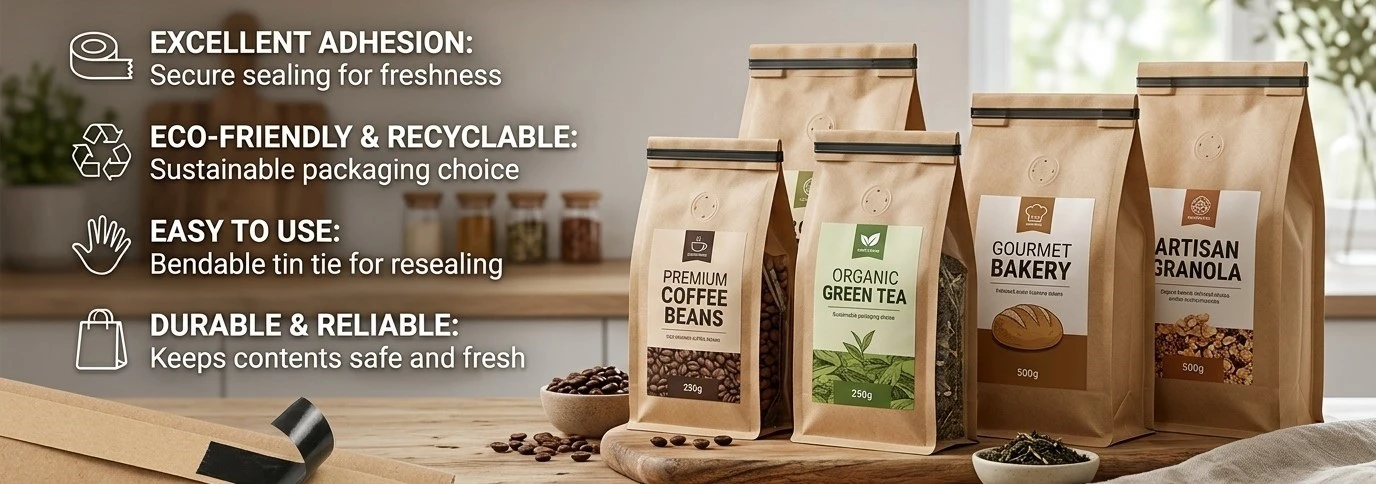
Paper double wire tin ties can be used on coffee and tea packaging bags where the package needs to be opened and closed repeatedly. In many coffee and tea packages, the primary barrier is provided by the bag liner, metallized film, valve, or other packaging structure. The tin tie can serve as a fold-over closure when the outer bag or paper-based packaging structure has been designed to accommodate this type of closure.
Before using a tin tie in coffee or tea packaging, check whether the bag structure supports a folded closure and whether the tin tie can be attached securely without interfering with the liner or valve. Do not claim that the tin tie alone locks in aroma, blocks oxygen, or prevents moisture ingress.
3. Dry Food and Specialty Product Bags
Paper double wire tin ties are suitable for dry food and specialty product bags that need a tidy fold-over closure before sale or a reclosable feature for consumers. Examples can include dry mixes, confectionery, dried products, and selected specialty dry goods, provided that the bag material and structure are compatible with the closure.
The suitability depends on the bag itself. A paper bag with enough top space and suitable stiffness may work well with a tin tie. A coated bag, a bag with a thick liner, or a bag with limited fold area may require testing before production. The tin tie should be presented as a closure option, not as a replacement for the barrier properties of the package.
4. Closure Fit in Small-Batch Packaging Operations
In small-batch packaging, the main question is not which products can use a paper double wire tin tie, but how the closure fits into the packing process. Different bag widths may require different tie lengths, and the same tie specification may not suit every bag format in a mixed production run.
Packaging teams should also confirm whether the tin tie will be pre-installed by the bag supplier or applied during the packaging process. If the tie is applied manually, folding consistency and placement need to be checked so that the bag top closes neatly and the tie is positioned correctly.
A trial run with the actual bag, fill level, and closure method is important. This helps confirm that the tie length, attachment method, and folding process work together before the closure is used in regular production.
What to Check Before Using a Paper Double Wire Tin Tie
Before selecting a paper double wire tin tie for a packaging application, review the following points:
- Bag top space: Is there enough flat space above the fill line to fold the bag top and attach the tin tie?
- Tie length and bag width: Does the tin tie length match the bag mouth width? A tie that is too short may not span the fold, while an oversized tie may create unnecessary overhang.
- Bag material and structure: Is the bag paper, coating, liner, and thickness compatible with the chosen tin tie and attachment method?
- Reclosing requirement: Does the consumer need to reopen and reclose the package? If the package is single-use, a tin tie may not be necessary.
- Attachment method: Will the tin tie be pre-installed by the bag supplier, or applied during the packaging process? Check adhesive compatibility, placement, and folding consistency.
- Product type: Is the product dry or liquid? A paper double wire tin tie is a fold-over closure, not a liquid-leakage solution.
- Trial run: Test the actual bag, fill level, and closure method before production to confirm that the bag folds and recloses as intended.
Material and Recycling Note
A paper double wire tin tie is a composite structure of paper tape and metal wire. Its end-of-life handling depends on local collection systems and whether the paper and wire can be separated. It should not be presented as "easy to recycle" unless local recycling conditions support that claim. For packaging teams, recycling should be treated as a local infrastructure question, not as a universal product advantage.
Conclusion
A paper double wire tin tie is a practical closure option for paper and flexible packaging bags that need a fold-over, reclosable closure. Its main value is in holding a folded bag top closed and allowing repeated opening and closing. The right question is not how many household uses it can cover, but whether the bag has the top space, material structure, tie length, and attachment method needed for the closure to work properly.
If you wish to purchase relevant products, please contact us.