How to Cut Paper Twist Ties from a Spool
Cutting paper twist ties from a spool seems straightforward, but the right tools, length determination, and workstation setup can make a meaningful difference in efficiency and material waste. This guide is written for manual workstations, production environments, and buyers evaluating spool-fed twist ties.

1. Spool Specifications That Affect Cutting and Feeding
Before choosing cutting tools, make sure the spool itself is suitable for your workflow. Several spool parameters can affect cutting and feeding. Three of the most important are:
| Specification to check | What to consider | Impact on cutting / feeding |
|---|---|---|
| Wire diameter | Light to heavy gauge | Thinner wire generally cuts more easily; heavier wire requires a cutter matched to the wire diameter. |
| Paper construction / coating | Examples may include Kraft, bleached, waxed, double-layer, or other finishes | Affects how cleanly the cut edge holds together and how the paper reacts at the cut point. |
| Spool length and core size | Workstation-length spool or machine-length spool | Affects holder type, feed behavior, and how often spools are changed. |
Thinner wire generally requires less cutting force, while the appropriate wire diameter depends on the bag, bundle, application, and required holding strength. Heavier wire may provide stronger holding but can require more cutting force and a more suitable cutting tool.
Spool performance also depends on winding consistency, core dimensions, and feeding requirements. If feeding problems recur, check with your spool supplier. For production applications, confirm available spool specifications with the supplier before ordering. Common spool configurations should be selected based on the application, cutting method, and feeding requirements.

2. Use the Right Cutting Tool
A common problem is using ordinary office scissors. Depending on the wire diameter and paper construction, scissors may compress or tear the paper covering before the wire is fully cut, leaving a jagged wire end. This looks unprofessional and can scratch hands or snag on packaging film.
For lighter wire, a small pair of diagonal cutters or similar wire cutters usually works well. When properly matched to the wire diameter, these tools can cut the wire and paper covering cleanly with less crushing.
For heavier wire constructions, use a cutter rated for the wire diameter rather than forcing a light-duty tool beyond its capacity. Avoid tools that crush rather than cut, as crushing can separate the paper from the wire.
Cutting angle:
A slight angled cut may make the cut end easier to handle in some applications. A straight cut is also acceptable if the ends are folded inward after twisting. The best angle depends on your cutter and tie construction, so test straight and angled cuts on your actual material before standardizing the process.
3. Determine the Right Cut Length
Instead of guessing, use a simple measurement method:
- Close a sample bag or bundle the way you normally would.
- Wrap a tie around the closure point and twist it as you normally would during production.
- Mark where the tie ends naturally after twisting.
- Remove the tie and measure it.
- Add a small handling allowance, depending on operator preference.
- Test this length on a batch of samples before committing to a workstation setting.
A length that is too short increases rework; too long wastes material and creates messy tails.
The table below gives example starting points for testing. These are not industry standards-your own product dimensions, bag type, wire diameter, twist style, and application will determine the best length.
| Application | Example starting point for testing | Notes |
|---|---|---|
| Bakery bag closing | Enough to wrap twice and leave a comfortable tail | Adjust based on bag neck size |
| Produce bunching | Enough for single or double twist around stems | Depends on stem thickness |
| Light bundling | Enough to wrap securely and tuck the end | Adjust based on bundle diameter |
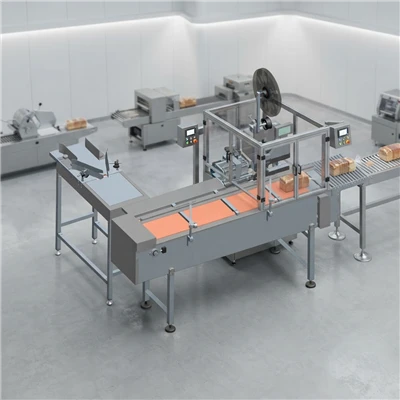
For machine-fed applications, the required length is usually determined by the tying machine itself. Spools can be supplied matched to the exact length your machine requires.
For bakery applications, paper twist ties are commonly selected based on bag size, closure method, and the required tie length.

4. Batch Cutting SOP for Manual Workstations
If you cut many ties per shift, use a simple batch cutting procedure:
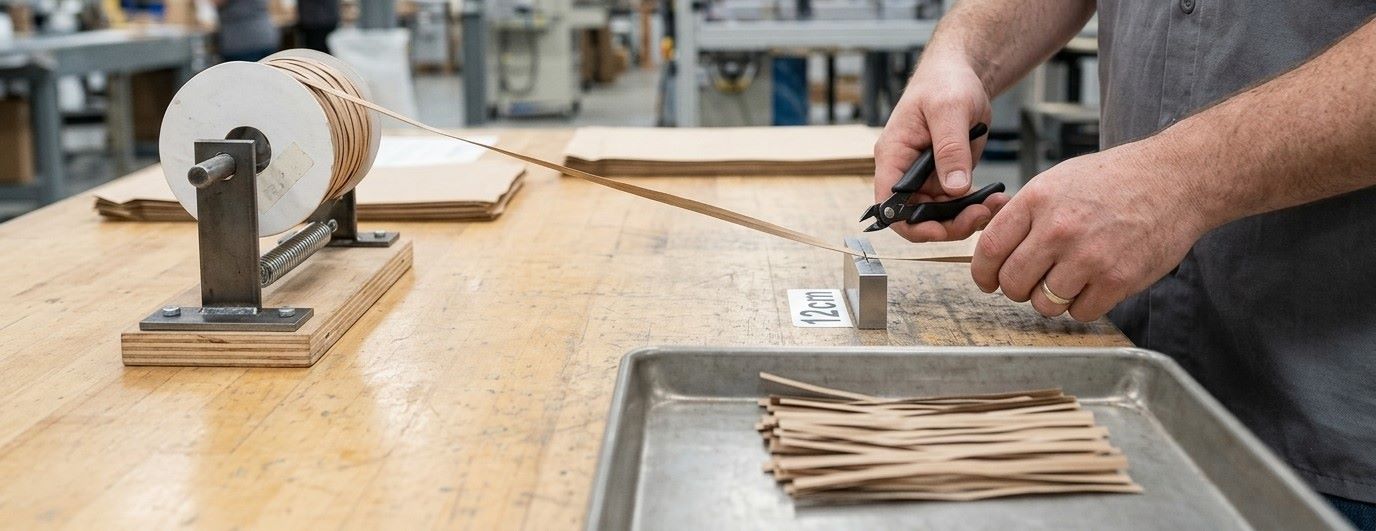
- Mount the spool on a horizontal holder or dowel so it rotates freely without over-spinning. A holder with light brake friction helps prevent overruns.
- Set a fixed stop-block or tape mark on the bench at your chosen length.
- Pull one strand at a time to the same fixed reference point. Do not stack multiple ties together for cutting; this causes inconsistent ends.
- Cut with sharp diagonal cutters using a controlled motion. Hold the tie close to the cut point to prevent the cut end from flying.
- Collect cut ties in a tray or designated container to keep them organized.
Consistency comes from using a fixed stop, consistent pulling distance, and consistent cutting motion. Train operators to pull the tie to the same fixed reference point each time, rather than estimating by feel.
5. Common Feeding and Cutting Problems
Paper splitting at the cut end
Cause: Dull blades or cutting straight across with scissors.
Solution: Check cutter condition and replace dull blades. Use a slight angle if it improves the cut on your material.
Spool overruns and tangles
Cause: Spool mounted too loosely or uneven winding tension.
Solution: Check spool mounting and use a holder with light brake friction. If the problem continues, check winding consistency with your supplier.
Inconsistent cut lengths
Cause: No fixed reference point, or operators pulling different amounts.
Solution: Use a fixed length reference and train operators to pull to the same point each time.
Hand fatigue during high-volume cutting
Cause: Using pliers without spring return or too much force.
Solution: Use spring-loaded diagonal cutters or consider a semi-automatic cutting station.
6. Manual Cutting vs. Machine Feeding
| Factor | Manual cutting | Machine feeding |
|---|---|---|
| Best for | Low to medium volume, frequent length changes | High volume, repeated identical lengths |
| Length flexibility | High | Limited to machine setup |
| Labor requirement | Higher manual handling | Lower manual labor per tie, but requires setup and maintenance |
| Consistency | Depends on workstation design and operator discipline | More repeatable when properly configured and maintained |
| Equipment requirement | Cutting tool, holder, length reference | Twist tie machine and compatible spools |
Manual cutting works well when daily volume is manageable and length flexibility is needed. It requires minimal equipment but depends on operator consistency.
Machine feeding is most beneficial when daily tying volume is high, operators spend a large portion of their shift cutting ties, consistent length and twist quality are important, and the same tie length is used repeatedly. Machine performance depends on setup, calibration, feeding, and material consistency.
The appropriate volume threshold depends on operation, labor cost, and machine model. Evaluate your current labor time per tie before deciding.
Machine-compatible spools:
If you use a twist tie machine, the spool must meet specific core size, winding tension, and wire diameter requirements. Machine-compatible spools are available to match these requirements.

7. Spool vs. Pre-Cut Ties
Many buyers start with pre-cut ties because they are convenient. Moving to spool format can make it easier to optimize tie length and material usage in some applications, and may reduce storage volume, but it requires a small investment in cutting tools and a simple workstation setup.
| Factor | Pre-Cut Ties | Spool Ties |
|---|---|---|
| Initial setup | Minimal | Requires cutting tools and holder |
| Length flexibility | Fixed pre-cut lengths | Can be adjusted to the application |
| Storage volume | May require more space per unit | Potentially more compact, depending on spool size and quantity |
| Labor requirement | Low for low volume | Higher for manual, lower with machine |
| Unit cost | Depends on order volume and labor costs | May be lower at high volume, depending on material usage, labor, equipment, and required length |
If you are currently using pre-cut ties and want to test spool format, start with one workstation and a small spool quantity. This allows you to compare labor time and waste before switching fully.
8. What to Check When Selecting a Spool Specification
When evaluating spool specifications, the following information can help determine the appropriate choice:
- Application (bakery, produce, industrial, etc.)
- Bag or bundle dimensions and required tie length
- Wire diameter (or a recommendation can be made based on application)
- Paper color and type (Kraft, white, waxed, printed)
- Spool length or core size (workstation spool vs. machine spool)
- Expected monthly usage
- Manual or machine use (if machine, provide model)
- Printing requirements (logo, date, color coding)
Buyers should provide these details to the supplier before finalizing a spool specification. Having this information ready helps ensure the spool matches production requirements.
Frequently Asked Questions
A: A small pair of diagonal cutters or similar wire cutters usually works well for common wire diameters. For heavier wire, choose a cutter rated for the wire diameter rather than forcing a light-duty tool.
A: A slight angled cut may make the cut end easier to handle in some applications. A straight cut is also acceptable if the ends are folded or hidden after twisting. Test both on your own material.
A: Use a horizontal holder with light brake friction and check spool mounting. If tangling persists, check the spool winding quality with your supplier.
A: Wrap a tie around the bag neck, twist it as you normally would in production, mark where it ends naturally, add a small handling allowance, and test on a batch of bags. The ideal length depends on bag neck size, wire diameter, and twist style.
A: Start by measuring how much time your operators spend cutting ties. If manual cutting is fast and volume is manageable, a machine may not be necessary. Higher volumes and repetitive lengths may make machine feeding more attractive.
A: Custom colors, printed text, and different paper constructions may be available depending on the specification and order requirements.
Next Steps
If you need help selecting a spool specification for your production line, contact our technical team with your application details. We can recommend a specification and arrange samples for testing where available.